In this Year of Darkness: LA Art Week
Essay / 17 March 2026 / By: Taylor Lewandowski
We are on a roll with our Los Angeles coverage: Hollywood Superstar thanks critic Taylor Lewandowski for this, his mysterious and emotional guide to a week of art in LA, where a childhood crush gets transferenced onto all the egos and names at every party.
Like with all men, I like it when he lies, but I love it when they tell me about what happens when they speak to strangers at the urinal.
This piece has both, so read it and understand.
The last time I saw Zechariah we stared at the all-brick insane asylum out our school bus window. We were the last two left. It was nothing unusual. A remnant from the past wedged between two corn fields. We lived the closest to our bus driver. Sometimes after she dropped us off, we’d race our bikes to horses enclosed in an electric fence. We timed our grip on the electric fence, congratulating each other on lengthy, shocking interludes. We loved the sensation of the volt charging through our limbs, but before the bus slowed for a stop, he looked at me with dirt on his face, and said, "I'm moving to California tomorrow. I'll never see you again." I said nothing, but he repeated as he walked backwards down the aisle: "Goodbye…goodbye…goodbye."
Twenty years later, I'm flying to Los Angeles, because he sent me a DM on Instagram from a suspect account with a tearful emoji profile picture and nondescript images. Anyway, the message: "Hi—I know it's been a long time, but I've been thinking about you. Would you come to LA?" I replied immediately and we kept DMing over the last month, but it never felt right, as if this person existed, not in a far away city, but on a different planet. I didn't say no. How could I?
I arrived at Taix on Sunset at 10pm. I waited for Zechariah to meet me. Earlier, I dropped my bags off at a high school friend's apartment and immediately grabbed an Uber. I listened to Joyce Carol Oates describing Joan Didion's analysis of media narrative on Jarrett Earnest's new podcast Private Lives: "We try to decipher meaning out of things that may in fact, be somewhat haphazard or chaotic." I thought about August Strindberg, specifically Eric Johannesson's The Novels of August Strindberg, and Johannesson's own description of the human brain's nature to collect spontaneous minutiae and arrange, nonsensical or not, in order, but, then or now, I questioned my own anxiety-ridden feelings about Zechariah. Every symbol I absorbed, I believed to be a sign, not an ordinary sign, like a red light or discount sale, but the heightened sense of my Uber driver named Darius and the rings along his fingers with sharp edges pointing forward.
I sent a couple texts to Zechariah. No replies. The restaurant was packed. A guy told me it's closing in a week to be bulldozed for another vulgar apartment complex. I ordered Trout Almondine. I sat alone, but it didn’t take long to be surrounded by people. I recognized some from other literary events over the last couple years, like Sammy Loren who runs the reading series Casual Encountersz and Joseph Mosconi who oversees the Poetic Research Bureau. I had missed a "social sculpture" reading outside Taix with writers like Lily Lady, Meat Stevens, Sophia Le Fraga, and others. I met the Executive Chairman of Book of the Month Club and editor of Volume 0, John Lippman, who described the pros of publishing a novel in this new subscription based program, which has existed since 1916, but revamped in 2017 with Lippman's leadership the venture reached ten million in revenue and climbed to fifty million in 2024. Obviously, Lippman crushed the market. I finished my Trout—no Zechariah.
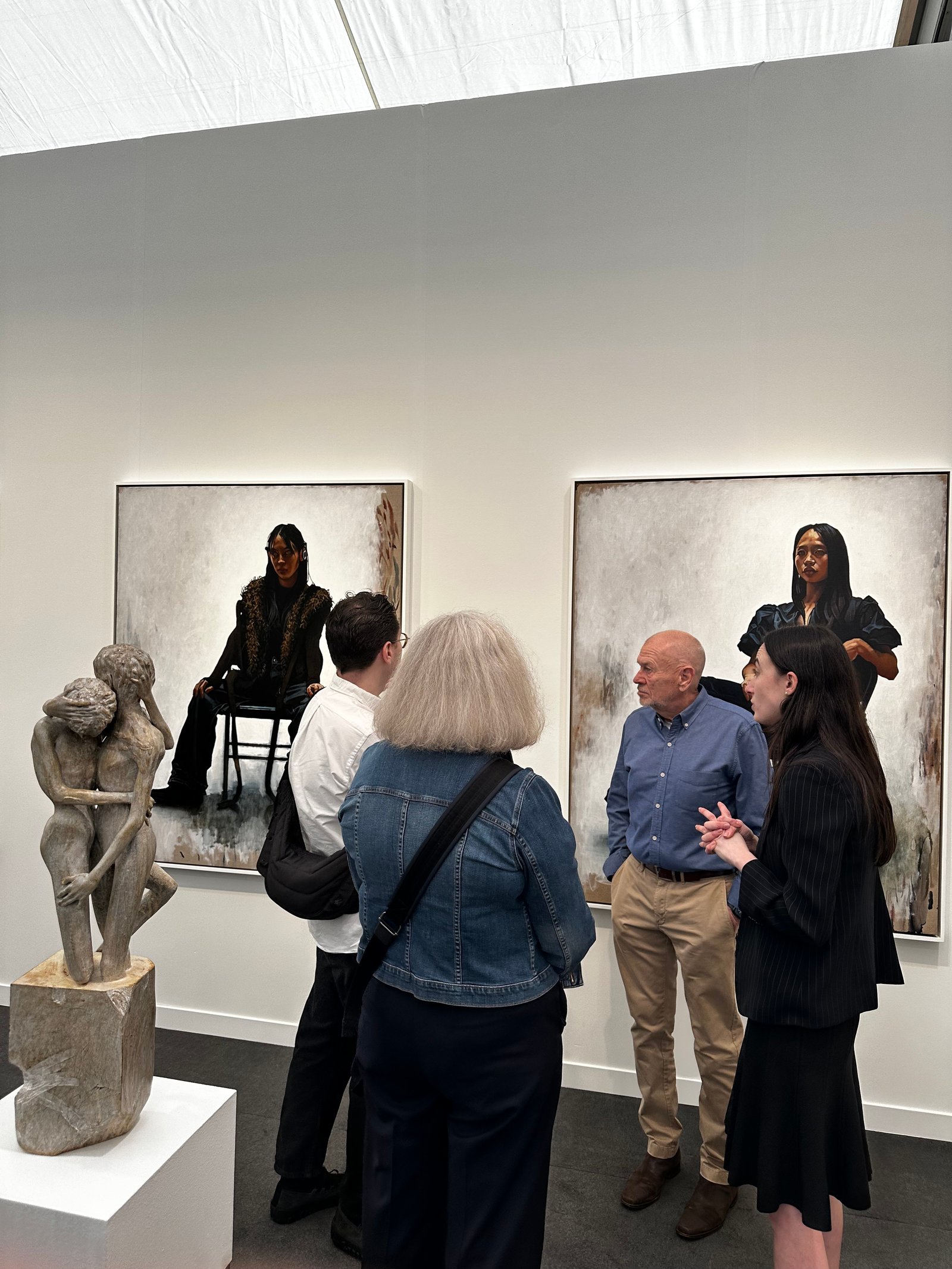
The next day I met K.O. Nnamdie, owner and curator of Eidmann Gallery, at Frieze. I didn't tell them about Zechariah—not yet. Instead, we chatted about the allure of Los Angeles, a failed bookstore, laughable presentations. I leave K.O. to explore on my own. I circle the booths, projecting Zechariah's unknown expression on middle-aged men wearing designer or boys with funny faces and receding hairlines. Zechariah still hasn't replied. Editors from a magazine told me frieze was a boring, bloated event for wealthy cretins. Another impressive iteration of "luxury items" for Bezos types. Regardless, I stopped at Lomex's booth with a male nude sculpture twisted with missing limbs by Kye Christensen-Knowles, along with several portraits of Hiji Nam, Diane Severin Nguyen, Olivia Kan-Sperling, and Liv Cuniberti in his typical dystopian coldness. Each subject is wearing black, seated in a folding chair against a rough backdrop.
Later, I turned around and watched a young man with a perfect jawline pose with his Lacoste polo collar popped before a photograph of a pornstar in a domestic scene. He said to his friend: "Look at me."
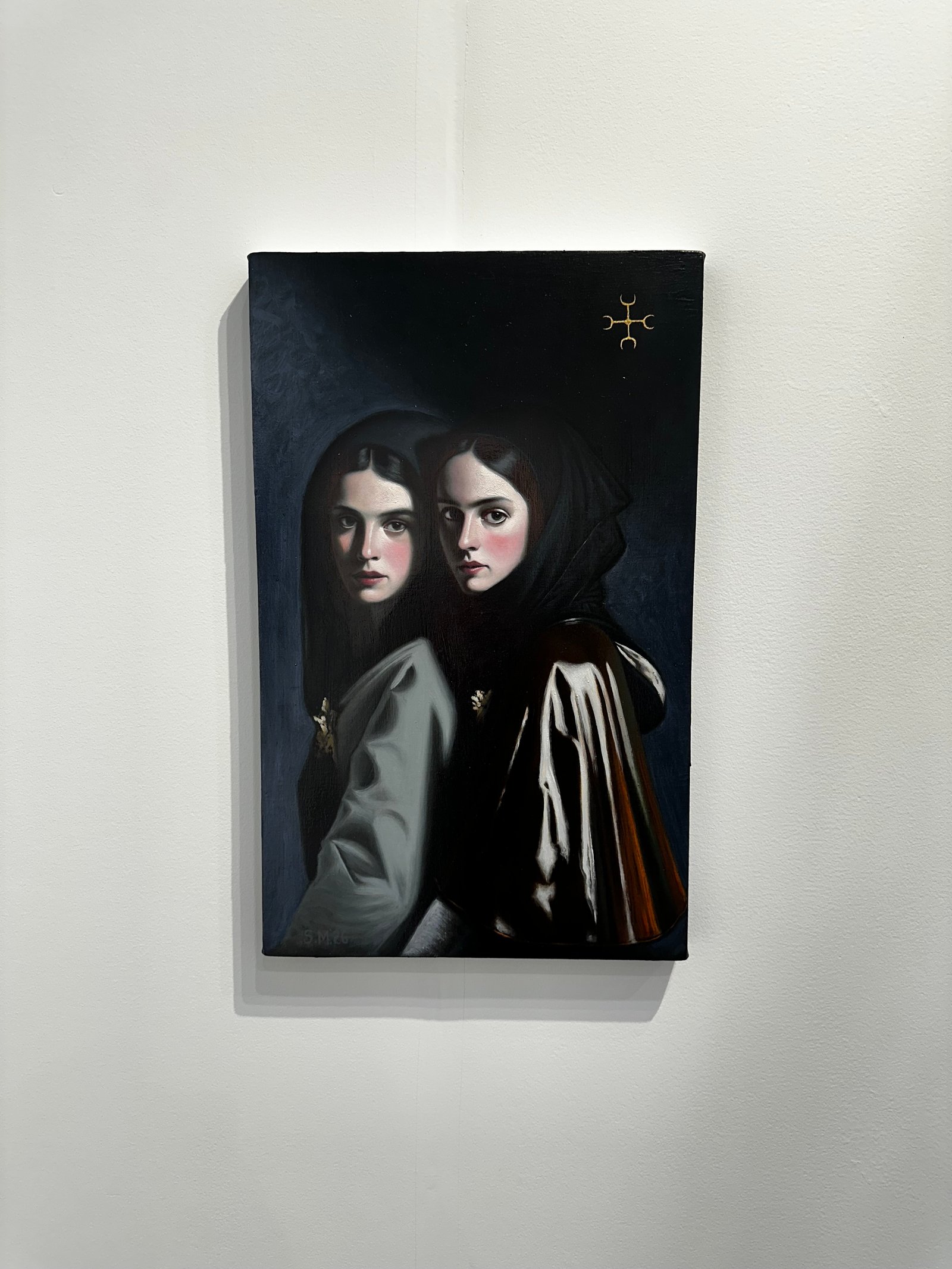
K.O. and I sat in an Uber, heading to Chateau Marmont, where I have never been, but K.O. insisted is "a real treat.". Within the shadow of my reflection in the tinted window and incoming traffic, I witnessed Zechariah dancing along the highway, like an angel. I felt empty after frieze. K.O. described their newfound love for Los Angeles — its glamor, mystique. I imagined Zechariah sitting in class drawing headless horsemen disappearing in a scratched out forest. I have a tendency to deflect, hide. K.O. told me: stop swallowing demons.
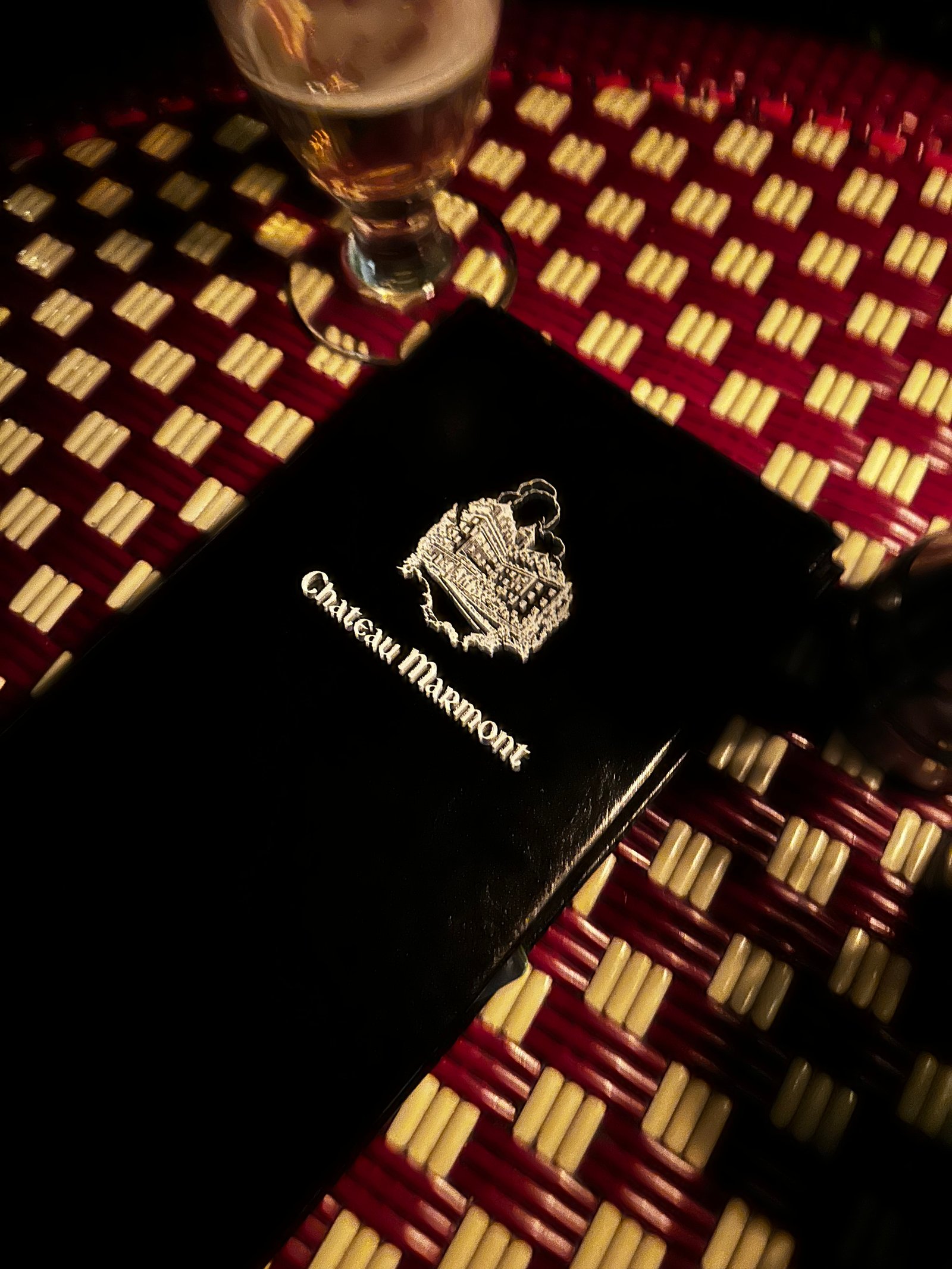
At Chateau Marmont, K.O. and I ate a light dinner. Across from our table lounged Luca Guadagnino with his entourage. I tried not to stare at him, but when I stood up to use the restroom, we shared a passing glance. I heard his chair, but I didn't believe he followed me until I opened the door to the restroom for him. I didn't say anything. I acted normal. We approached the floor-length urinals filled with ice. We pissed next to each other. We washed our hands at the sinks. We inspected ourselves in the mirror. I asked him, "Do you struggle with obsession?" He replied, laughing: "Of course." “Do you know the life of Newton Arvin?” “No,” he said. “I’ve been reading Capote’s biography. They were lovers. Arvin wrote an award-winning biography on Melville.” “Okay,” he said. “So what?” "He grew up in Valparaiso, Indiana." "Where is Indiana?" asked Luca. "It doesn't matter," I said. "What does matter?" "Police ransacked his home in Massachusetts, confiscating his gay erotica and journals depicting numerous love affairs." "What does this have to do with obsession?" asked Luca. "It is the negation of obsession—the patrolling of desire…" "Interesting," he said. "Maybe there's a movie there…"
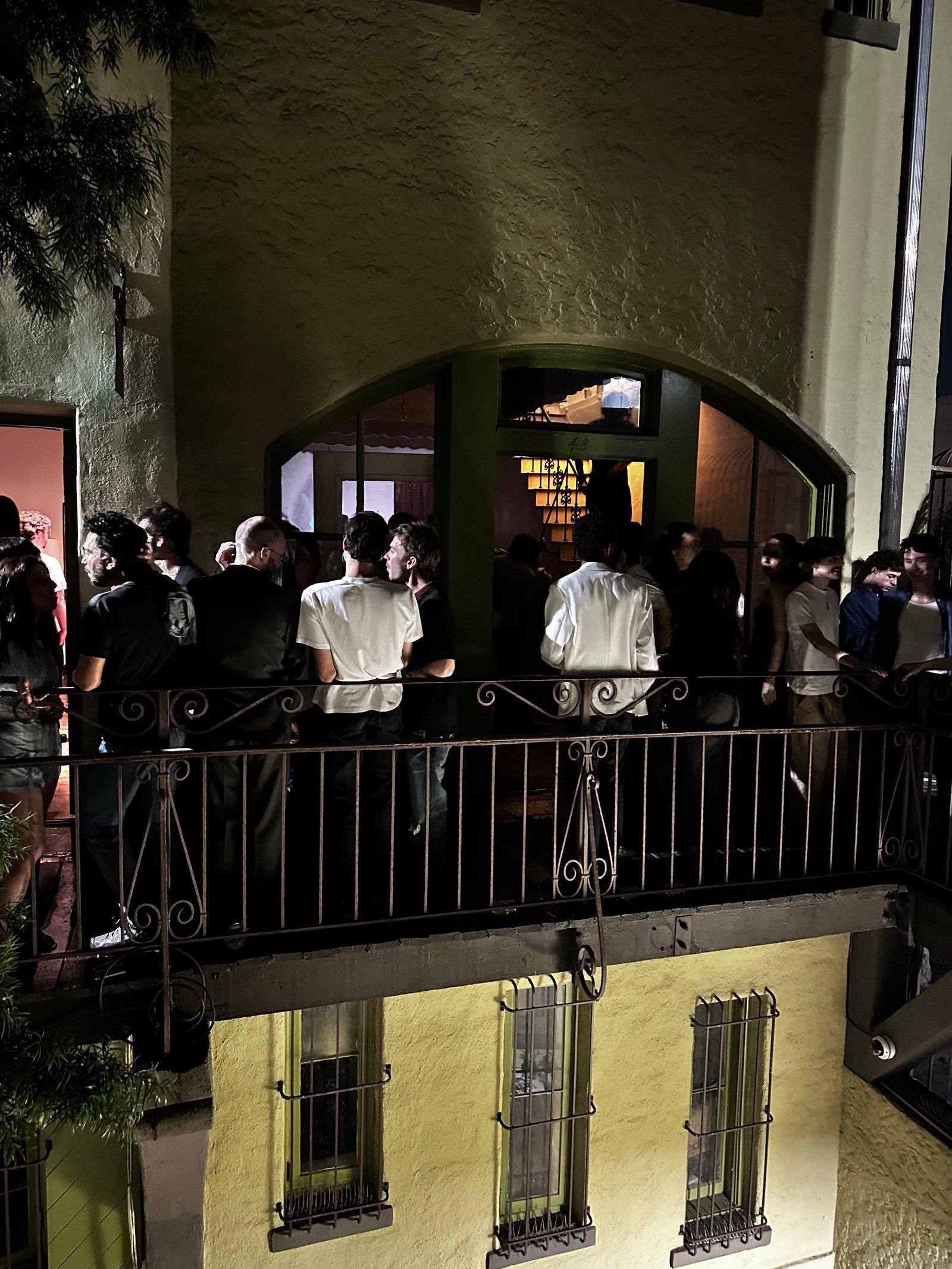
After dinner, K.O. disappeared to their hotel room and I caught another Uber to a party at O-Town House hosted by Lomex and Gaylord Fine Arts. Every odd angle of the space was jammed with people. I met up with two new friends: Miguel and Justin. We pushed through the crowd, awkwardly navigating the scene. We tried to find the dance floor. We climbed stairs and squeezed onto the balcony. Miguel ran into a long lost college friend and I talked to his friend about her speculative fiction mag. Alana Haim brushed past me.
I noticed Aria Dean in the corner with Laszlo Horvath, whose performance in Diane Severin Nguygen's WAR SONGS at MOCA was routinely shared on Instagram, and now held a heavier significance as the war with Iran had commenced with various headlines communicating the death of Iran Supreme Leader, Ayatollah Ali Khamenei. We finally squeezed through and into the next room, down the stairs, where I ran into Patrick McGraw, editor of Heavy Traffic, and finally to the packed dance floor below. We danced around slumped figures and stoic women. Dennis Hopper’s son laughed in the corner with a boy in denim. Jasmine Johnson behind the deck. I closed my eyes and envisioned Zechariah in an American Apparel ad. I opened my eyes and thought Zechariah was dancing in the corner with his shirt off. I edged closer, but no it wasn't Zechariah. It couldn't be. I checked my phone. There was a text message…
In the Year of Darkness, 2029,
the rulers of this planet
devised the ultimate plan.
They would reshape the Past.
The plan required something
that felt no pity. No Pain
No fear;
Something unstoppable. They created
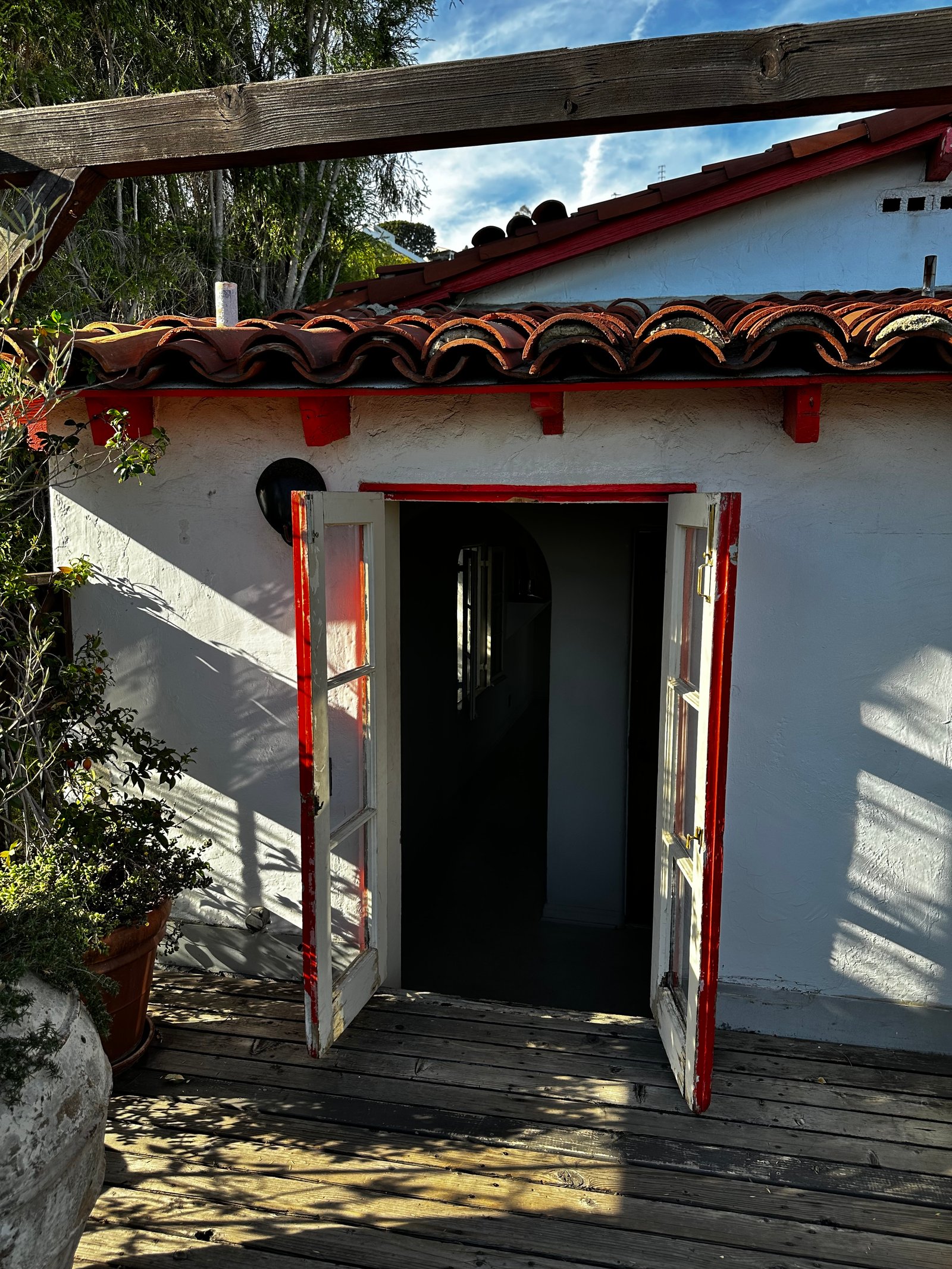
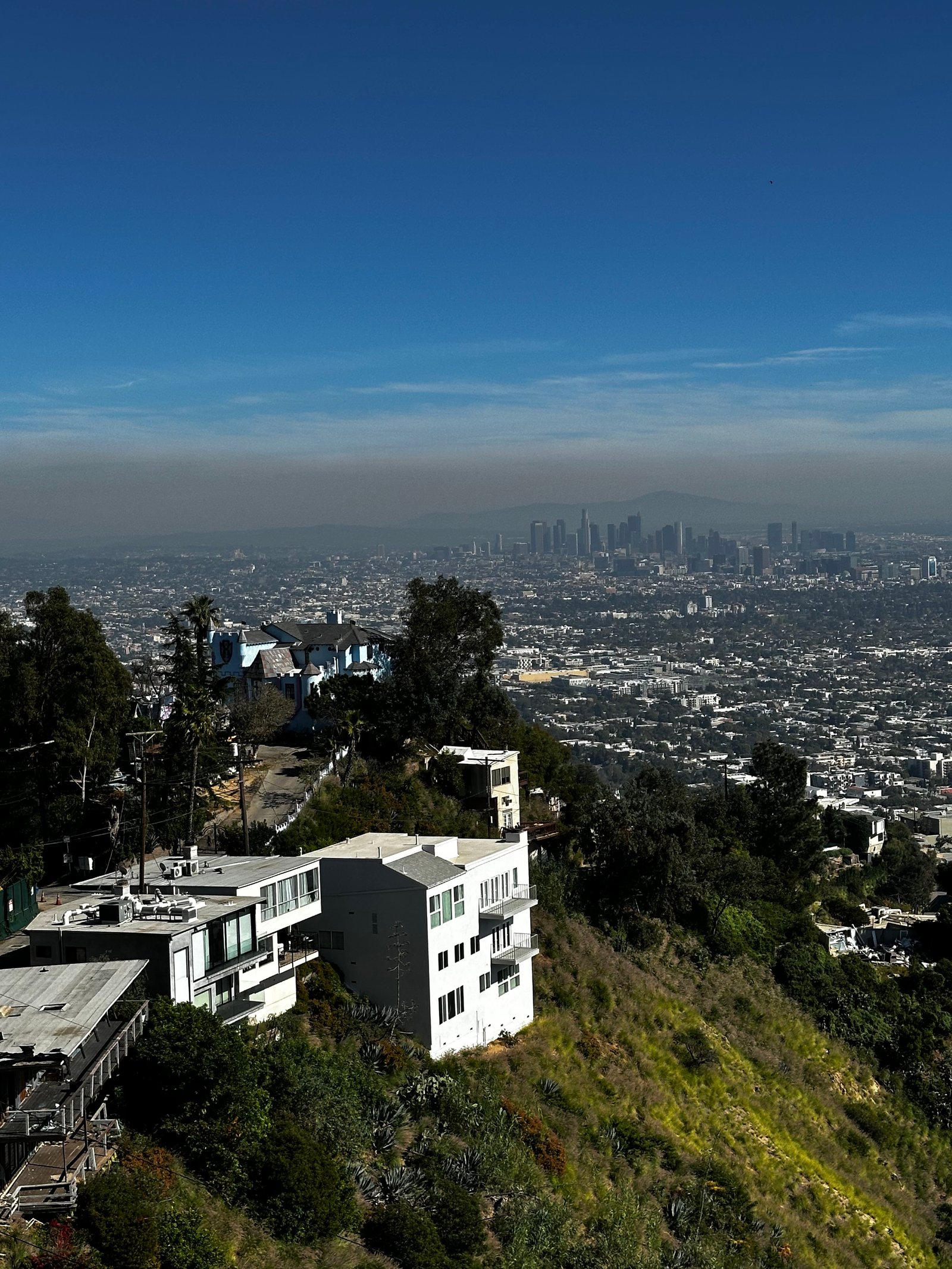
I joined Jane outside. She sat on a bench, asking AI about the various hovels in the hills. The surrounding area were not extravagant icons of celebrity wealth, but crumbling, vacant buildings. At the bottom of the house, trash collected in a wide-spread thicket. I too stared, like Jane, at the beige home above us with rectangular windows. I imagined some bloated pornographer, peering out the window. The most conspicuous house in the hills was a purple castle, which someone told us belonged to an alley of clowns. It didn't take long. The vision of Los Angeles nuked to ground zero, patrolled by artificial intelligence. Humans plotting under asbestos, water-depleted landscape. 2029? Or, is this another unrealized fear, like the year The Terminator came out, 1984? Jane and I gazed upon the city of LA. The woman in the blue dress danced around us, oblivious.
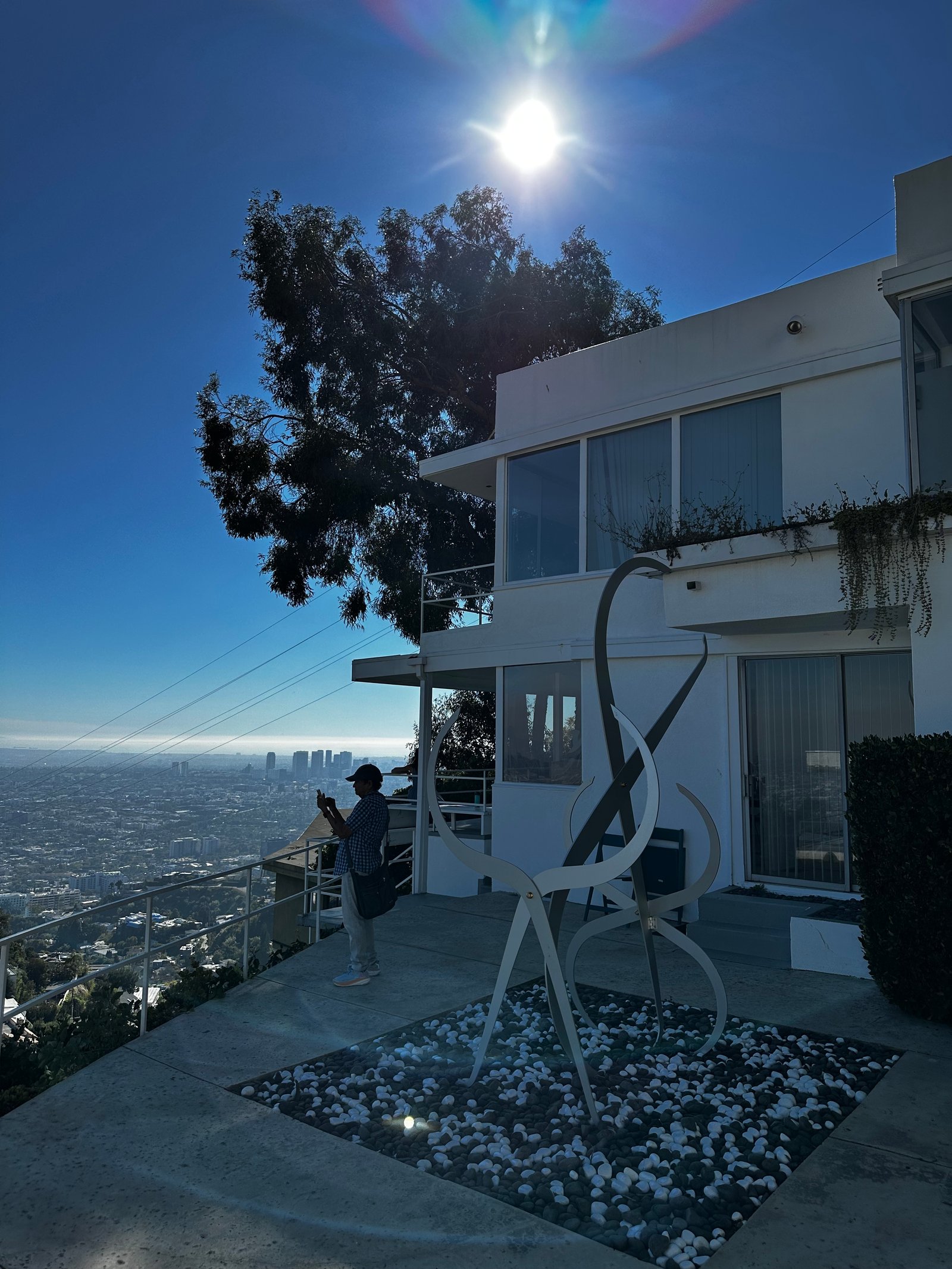
I still haven't responded to Zechariah's text. I've read it several times: "im sorry. im bad at communicating. im scared to meet you." Jane drove fast down the winding streets. She told me: "This is dangerous." I told her about the time Elizabath Taylor pulled Montgomery Clift's teeth out of his esophagus and saved his life after his near-death accident, driving down hills just like these. I hold onto my seat.
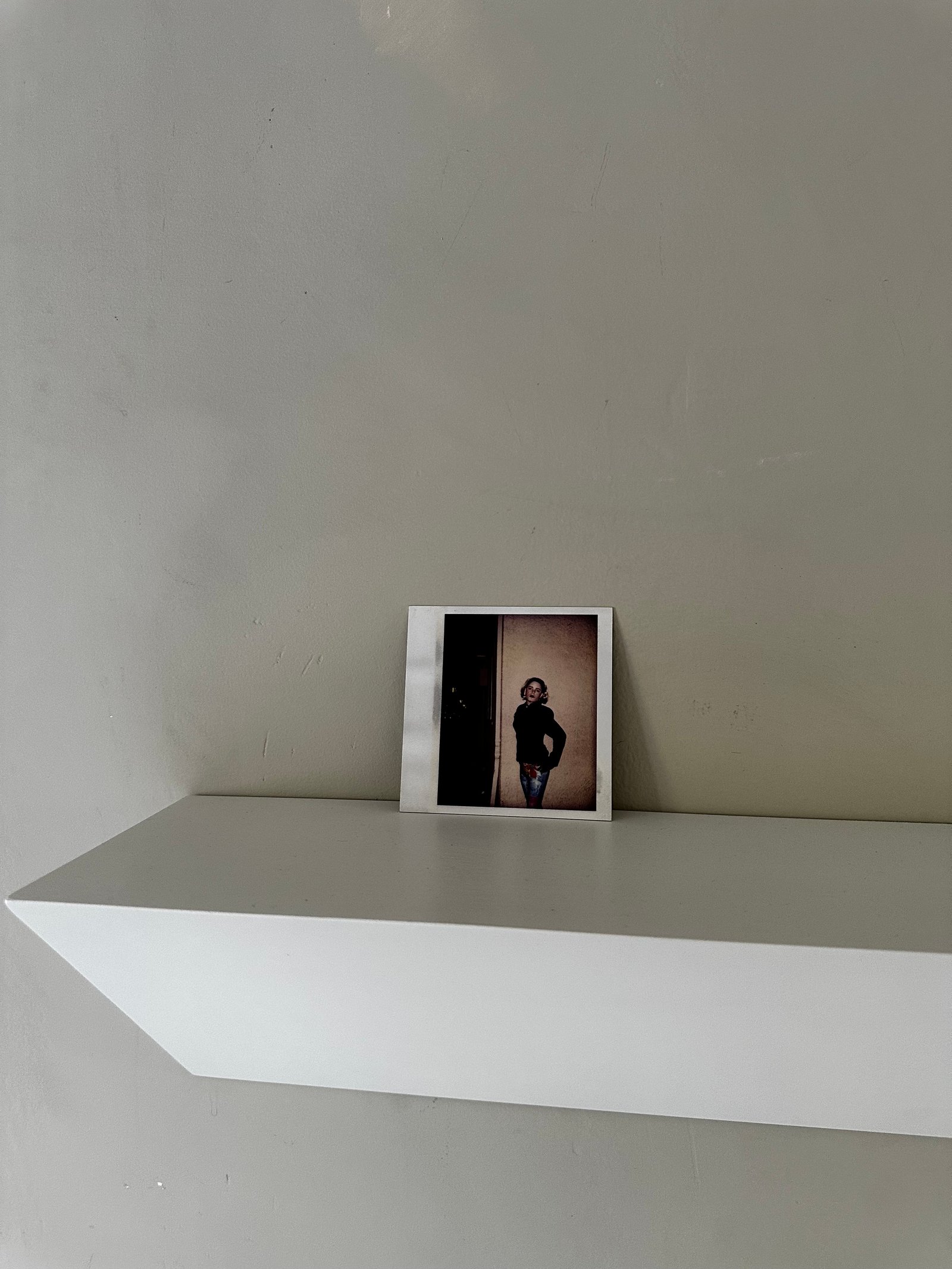
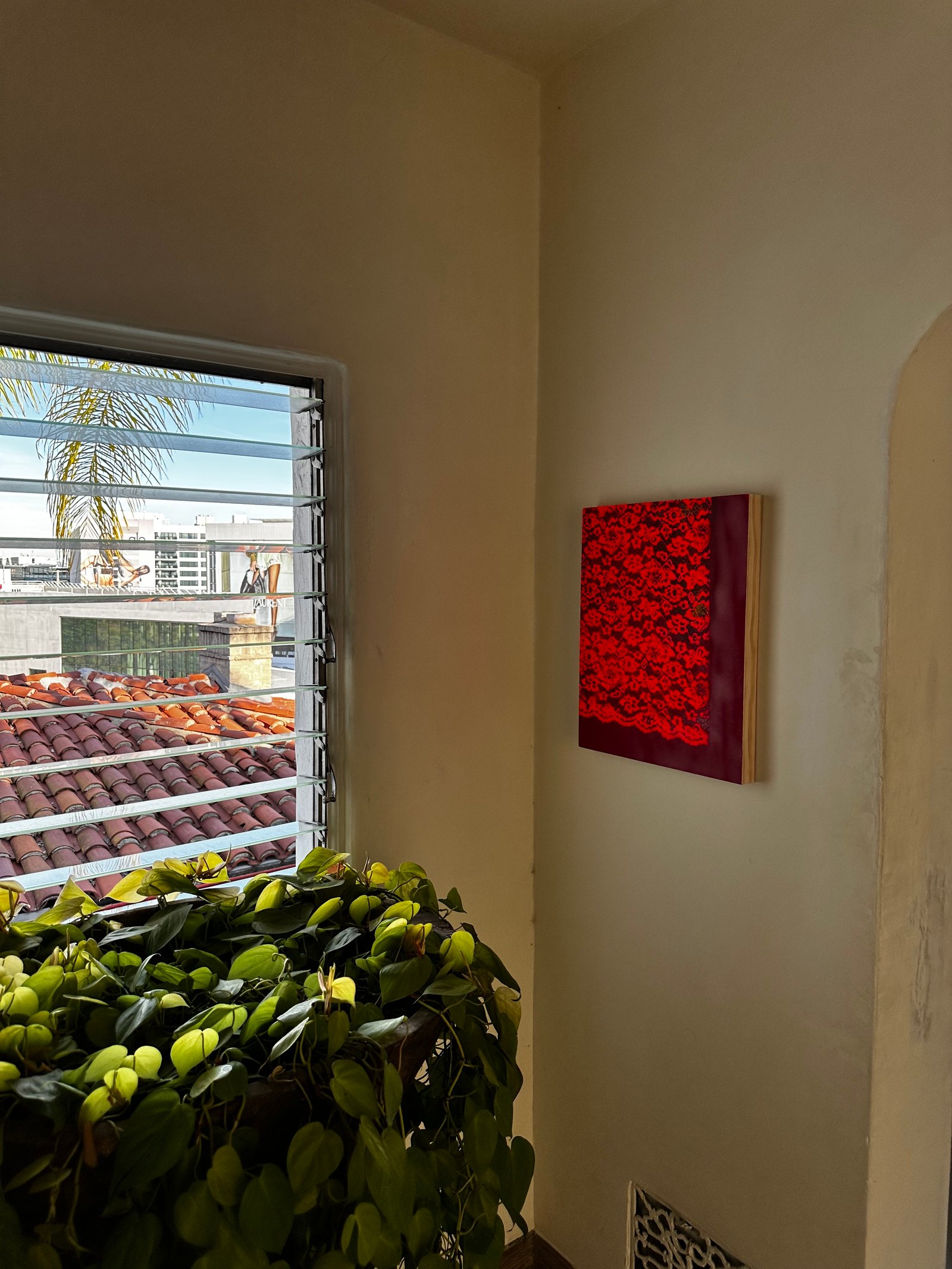
Jane dropped me off at the location of callie d. cohen's solo presentation, aletheia, curated by K. O. Nnamdie for their new gallery, Eidmann. Located in an apartment above Sunset, the exhibition fused the natural light and duality between the glamorous life below and the seclusion of this apartment in the hills. cohen's paintings, lace pressed onto wood panels; and various found objects, like silver Doc Marten boots, a glass eyeball, an old polaroid of the artist, and others created a fragmented conception of identity in flex. Evolving from their time at anonymous, K.O. Nnamdie heightens the presentation by its environmental context and exploration of identity against complicated signifiers.
On the balcony, I ran into Miguel again and Kendall Getty. Miguel asked about her tattoo on her elbow: a knife with the name Tura on its blade. She described the actress Tura Satana, most notable for her performance in Faster, Pussycat! Kill! Kill! Getty described Satana's gang rape at age ten in Chicago and subsequent training in martial arts, which resulted in her systematic revenge on each of her rapists. "I believe this tattoo protects me," she told us. I had never heard of Tura Satana, and I had not seen Faster, Pussycat! Kill! Kill!, but imagined Kendall Getty's knife floating above us—a psychic, haunting enactment of justice. I responded to Zechariah: "meet me tonight at bar latino."
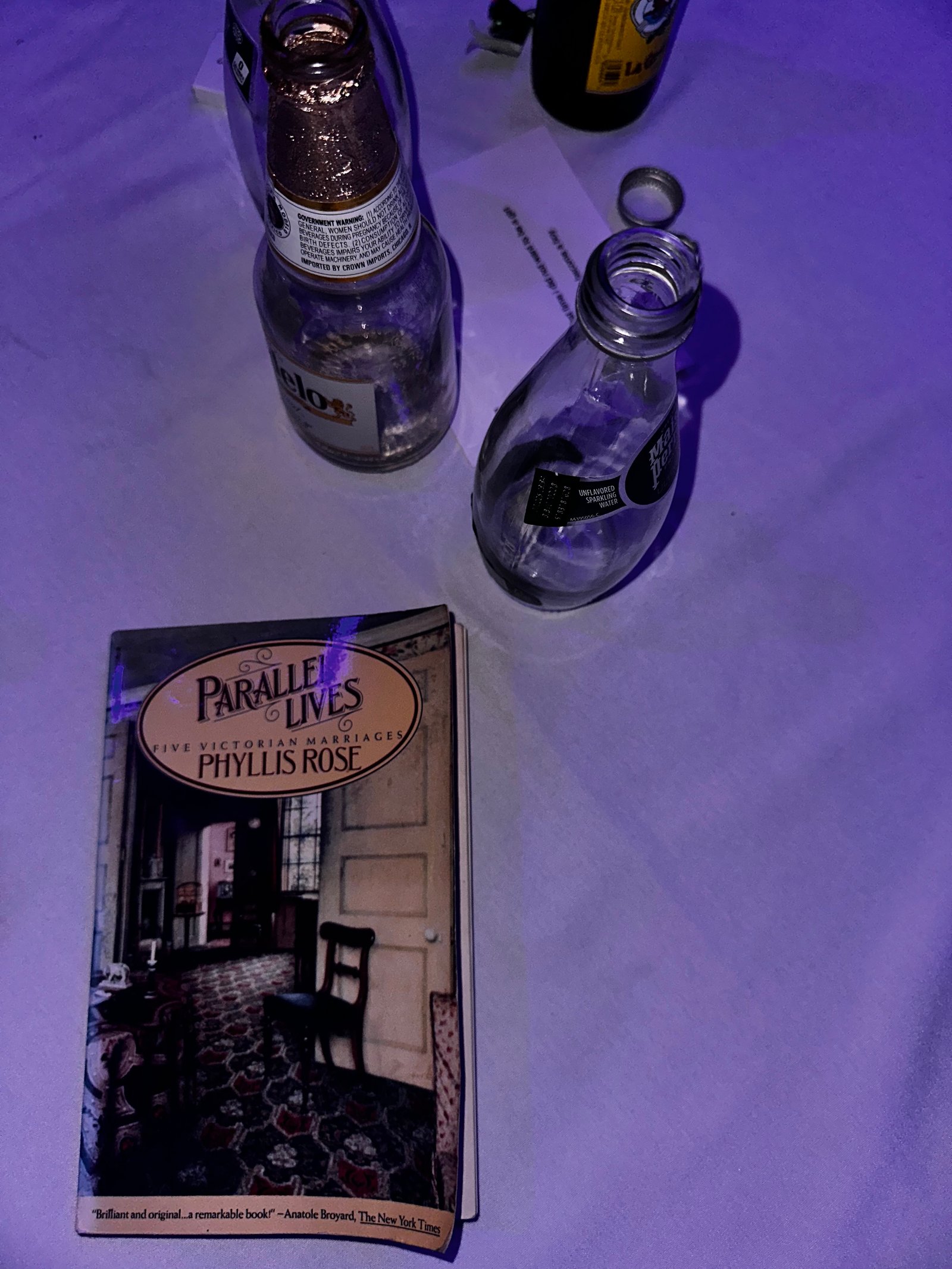
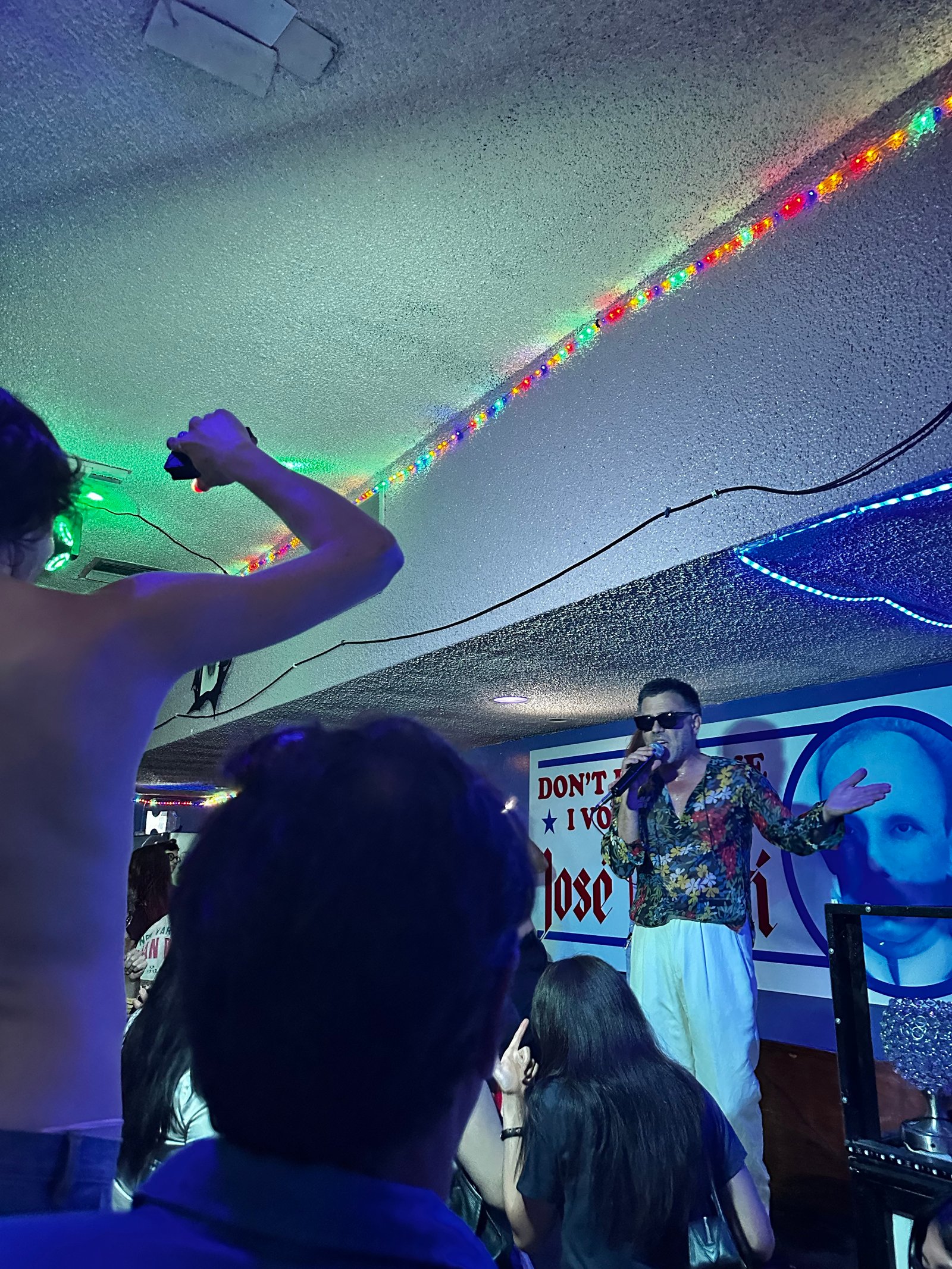
I sat next to Hedi El Kholti and watched Los Super Elegantes at bar latino. Sophia Le Fraga, Pedro Alejandro Verdin, and Michele Lorusso curated an exhibition of artists from Eve Fowler to Precious Okoyomon with DJ sets by Mia Carucci & Untitled Halo and, of course, a reunion of the mythic early aught art group, Los Super Elegantes. Essentially, the last great party of LA art week. Before they began, Martiniano Lopez-Croze tossed his jacket to Hedi and said, "Be careful! It's Valentino!" Hedi rolled it up and placed it on his lap. The small bar was now packed. I scanned the room. Everyone had sweat pouring down their necks. Alec Malin stood on a chair with his shirt off, lighting the stage. After some confusion, Milena Muzquiz and Martiniano Lopez-Croze finally began. They twirled around the tight stage. The music played loud over the speakers.
Vaginal Davis in Index once described their songs as "musical retable. You’re never sure when one song has officially ended. Most are sung either in Spanish or Italian, but it doesn’t matter if you can’t understand what’s being said word for word. The lyrics are abstract, they act them out.” Mike Kelley described their "aesthetic [as] pure pop…[and] punk. . . . The crumminess of their performance technique is less satire (or Jack Smith–style countertechnique) than an additional coat of degradation to sweeten the mix.” I fall into a trance. I don't think about Zechariah. I feel the sweat rolling down my back.
After the performance, I stumbled outside. The parking lot jammed with another social sculpture. My phone died. I worried I'd never be able to find Zechariah. I tried to borrow a charger, but couldn't find one, so I nervously stood in a group with K.O., Miguel, and Jade Guanaro Kuriki-Olivo. Miguel told Jade: "You have strong psychic capabilities." I decided to wander through the various cliques. I ran into Erica Dawn Lyle, former touring guitarist for Bikini Kill, who once performed in Indianapolis. We chatted about the difference between New York City and LA. I wandered back into the crowd. I tried to find Zechariah in the multitude of human expressions. I attempted to construct him in my mind until several groups split and I recognized him leaning against a sedan with arms crossed, confused, pale, skinny, afraid. I no longer recognized him. How could I? He looked exactly like me.