miasmami
Essay / 30 December 2025 / By: Qingyuan Deng
A hollowed out shell visits an empty hell, spotted with colonial relics in the form of deluded collectors, inconsequentially related. Qingyuan Deng’s historical dispatch from Miami basel. An alternative to the normative, self-deprecating and ironising art week “diary” proffered in Spike's 2024 Miami coverage and Plasters recent report (ironic sensation without feeling). Deng is unabashedly searching for closeness in the desert.
I tried to arrive on Monday night, to make it to a few gallery and museum openings, but I utterly failed in Miami. I seem to have a pattern of missing flights in or out of Miami.
I was worried because I planned to only use public transportation in Miami.
Luckily, my mother gave me her credit card information last minute.
I was staying in a beautiful Airbnb rental 5 minutes from the beach, with my friend A, an artist-turned-advisor, from San Francisco. Last year in Miami, we were also roommates in the same rental. The only difference is that last year I was single, and she was not, and this year the fortunes reversed. On my flight to Miami, I wondered how fruitful, or not, this pairing might be. I woke up Tuesday morning at 7am, straight to work at the NADA fair. A few VIP collectors were supposed to show up at my boss’s booth at 9am, but they never did. But again, the booth, featuring my college best friend Q’s conceptual photography about the production of desire and the tyranny of psychoanalysis, witty and incisive as it is, might be too challenging for early morning viewing.
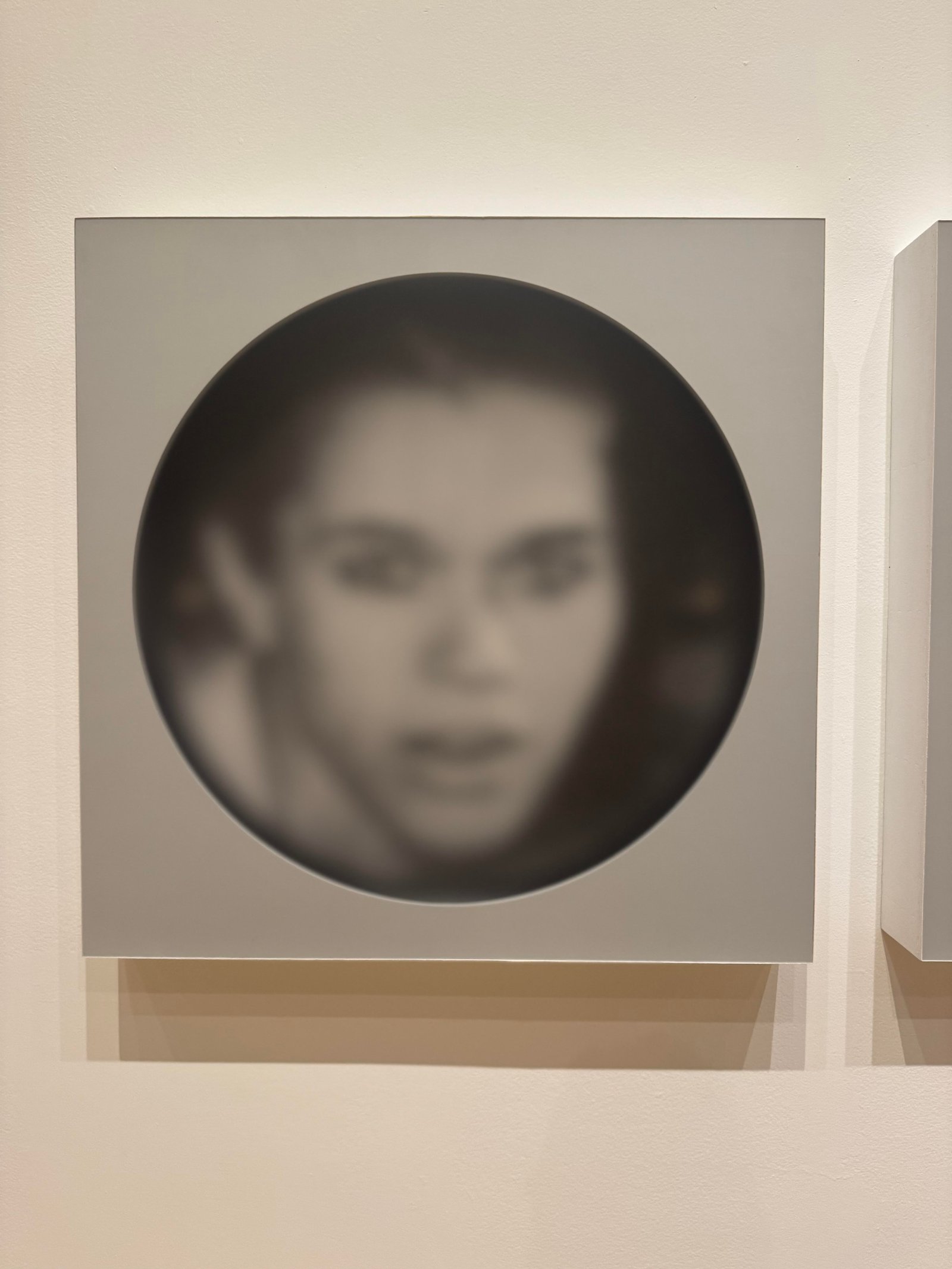
The collectors who did show up later in the day were amused enough to take selfies with Q’s appropriated images and ask many biographical questions but not enough to pull the trigger. A former reality television superstar who uncannily resembles Pamela Anderson (but only her character in The Last Showgirl) and a local gay couple exclaiming that writing erotica can resist the ascendancy of fascism in America finally bought a few pieces in the last two hours but after that sales dwindled, plumbing into more abysmal states as the week progressed. Since the inventory barely changed in quantity, I found myself staring all day at abstracted images of anal sex extracted from pornography. In each photograph, penetration appeared as a modernist composite of all possible physical and emotional scenarios of such acts across universes and timelines, rendered with an earth-shattering precision that muddied and degraded the erotic aura of its source.
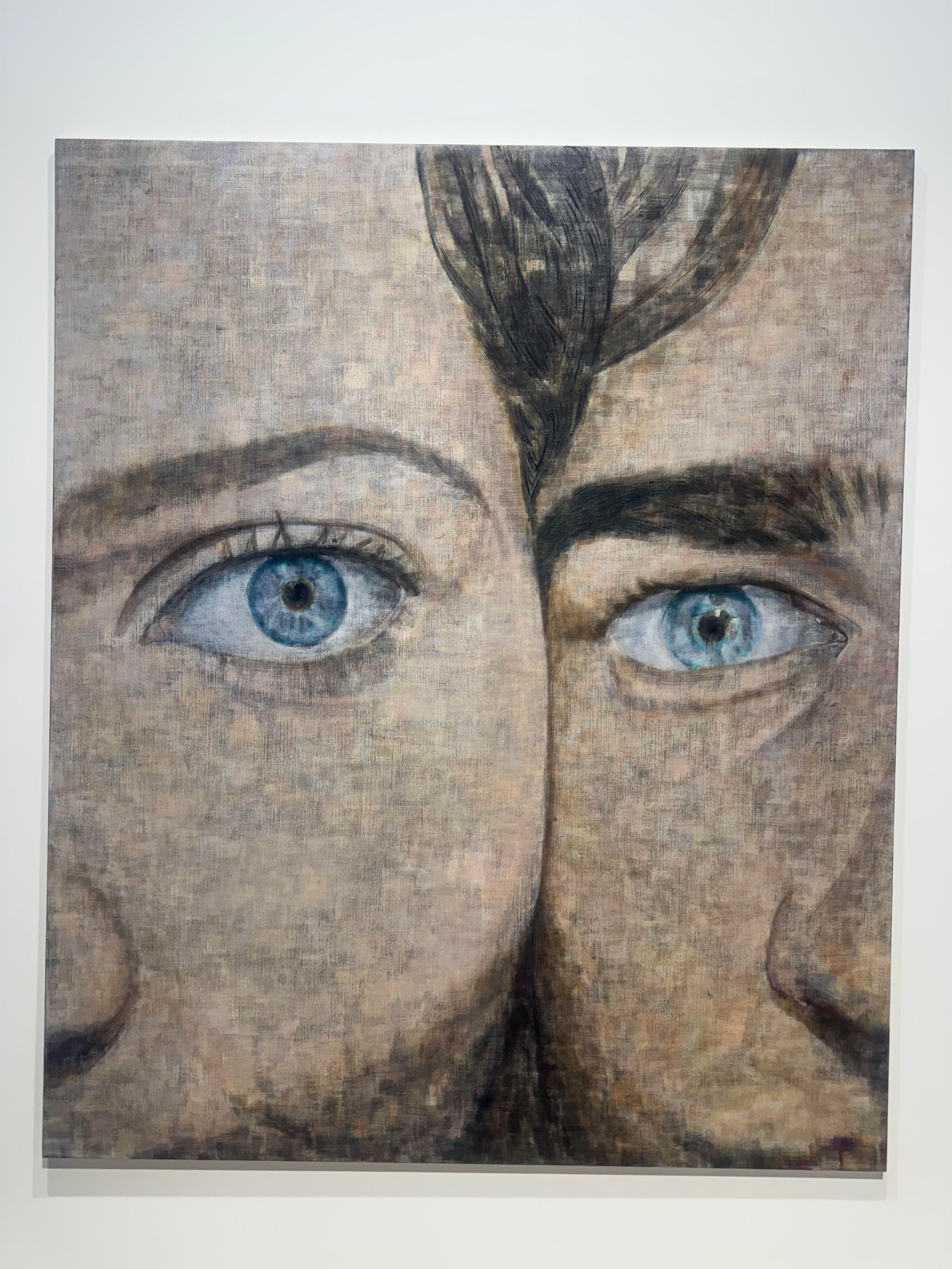
What remained was a devastating desperation, a search for interpersonal truth that sex alone, stripped to its mechanics, could no longer guarantee. At moments, the images seemed capable of lifting me out of the banal temporality of work, toward the subconscious or even the atomic fabric of matter itself. Yet the spell always broke. I was reminded that these photographs, however aggressively anti-representational, are still representations: packets of information several degrees removed from fleshly materiality, already caught in circuits where sensation hardens into data and data slides toward matter’s becoming-property. But no one wanted to claim them. I was utterly bored at the lack of enthusiasm, or even depressed about the state of collecting, but luckily I had wonderful booth neighbors, a more productive place to linger than the dangerous political economy.
My left-hand booth neighbor is a daughter of major Korean collectors. She decided to open a gallery to support her artist friends from international school. I liked how secretly erotic her booth was, full of funny paintings that harbor neurotic seeds, neuroticism about body’s limits. I didn’t like their overly optimistic color palette, but I used the paintings as an excuse to start a conversation, which eventually arrived at Japanese colonialism, with the young Korean woman. We both agreed that it is permissible for us, alienated by the frictionless experience of contemporary cosmopolitan lifestyle, to entertain colonial nostalgia a little bit. We then reached an addendum that it would be smart and the right thing to do to contain the romanticization of violence and oppression in art. Subjugation is seductive, to a certain degree only. We also circled the point, rather abstractly, that we can hold our complicity in class reproduction at a critical distance instead of disavowing it outright, and occupy a position between desire and responsibility with our tendency to accept subjugation. I forgot to get her number after a few days of being in the booth together, so I never got to ask her what she thinks about the fact that Nam June Paik received his elite education from wealth made by his father, a Japanese collaborationist. Perhaps that was a good thing, as the conversation would have shifted too uncomfortably close to the real and real guilts otherwise.
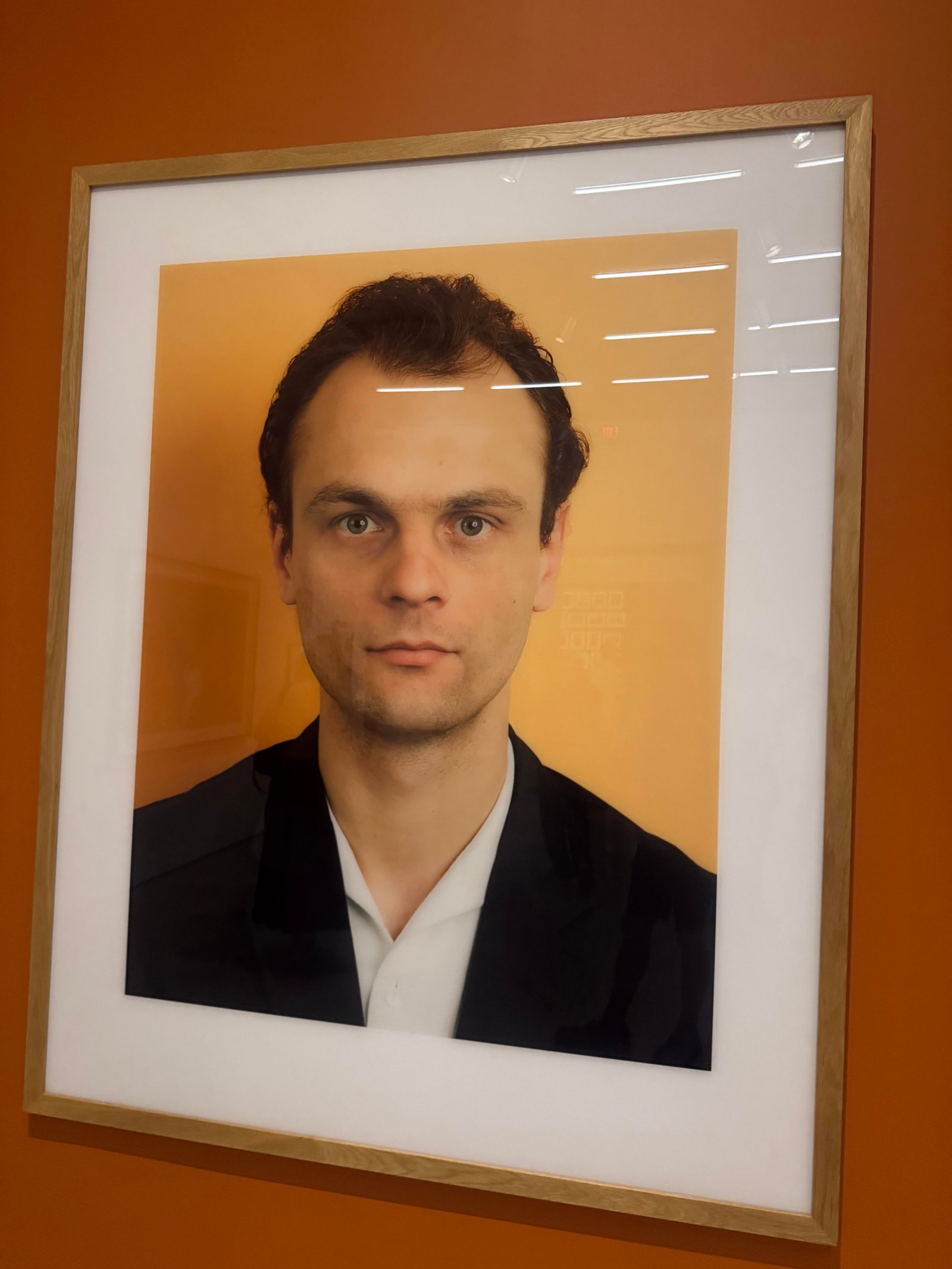
My right-hand booth neighbor was another young woman dealer from Germany, stellar in her ability to close deals. She showed four difficult paintings made by a young white male from Idaho, who is only concerned with the ontic properties of digital images, with no regard for real world events. In Miami, a lot of paintings being shown did comment on the nature of imaging technology but usually ground such exercise in depicting fleshly bodies. My German neighbor, however, was only interested in promoting paintings that are pure, in this case formally devoted to the recursive experience of being implicated in the virtual. Somehow, she was able to sell 2 of the four paintings. I was pleasantly surprised. One night, over drinks, she told me the paintings were coded with esoteric references to underground resistance groups hidden among the general Chinese populace in Kiautschou Bay Leased Territory. She felt guilty for not telling the story, as her great-grandmother lived under German rule and worked as a maid for one of the administrators and so did the painter’s great-grandmother. But again, business is business. I did regret not asking her if they were related at all.
Every night after leaving the convention center, I felt restless, easily tired, and terribly hungry. I couldn’t stay long at any of the museum openings. The shows all looked refined and expensive, but I felt disturbed by the number of women attending these openings hoping to find a high-earning man. I wanted to be honest with them and tell them the tragic truth about life. Still, I decided against it. It would be good karma for me to let them live with their illusion of what Art Basel is for a week. I did become friends with a Polish conceptual artist seeking American representation at the ICA Miami opening. We bonded over cars. He makes sculptures about how they traffic libidinal investment and I have always wanted to learn how to drive. Every night, we skipped parties in membership clubs and island houses and enjoyed big meals at gentrified ethnic restaurants in Little Haiti. He was attracted to me, I could tell. Alas there was nothing I could do about his useless attraction.
I was more flattered when a girl at a Silencio party thought I was straight when I was complaining about how boring the party was and tried to get free drinks out of me. I liked her until she mistook my question of “Where are you from” as an interrogation of her origin. I was more interested to see if she is from New York or a Miami native. It turned out she was Vietnamese and grew up outside Miami, only without the ability to speak the language. I was disappointed, with understanding, nevertheless. It must be alienating growing up Asian in one of the several American cities not built by or for Asians.
I had more joy living vicariously through my temporary roommate, A. I was happiest when I learned she had sex on the beach with a film producer from London, a man who specialised in transgressive indies, whatever that means. When I woke up at 7, she just returned from clubbing and told me beautiful stories of horniness and sensuality. In Miami, even casual sex feels loftier and takes on more stakes than it does in New York. Last year in the lobby of Edition Hotel, I kissed an Italian curator before he started crying and telling me how desperately he needed to go back to Europe to fix his collapsing relationship. I cried with him too, shedding tears for my own unrequited love. This year, I missed him a little on my flight to New York, but I soon remembered his name and looked him up. I realized that he curates exhibitions that favor the experiential over the theoretical, often platforming painters and sculptors who are too eager to mask their lack of agenda as radicality. I also realized he makes more money than I will ever make. I started to resent him, not because we did not reach the stage of sex, but because curating contemporary art is an ideological battle, a life-and-death struggle, and he is my foe, not my friend.