Pier Paolo Pasolini: Longhairs and the Real Anti-Fascism 1973-1975
Essay / 9 November 2025 / By: Pier Paolo Pasolini
Hollywood Superstar publishes Italian director Pier Pasolini's Cosair writings (1973–75). These excerpts examine the international style of counterculture and the political adaptability of fashion via the infamous fascist long-haired males. The second extract is the conclusion to one of the more famous essays from the collection, which identifies the “new fascism” with its “pragmatic” and “American” style. The Corsair Writings remain remarkable, contemporaneous to Pasolini's final film, Sàlo (1975), which depicts the depths of fascist libertine depravity.
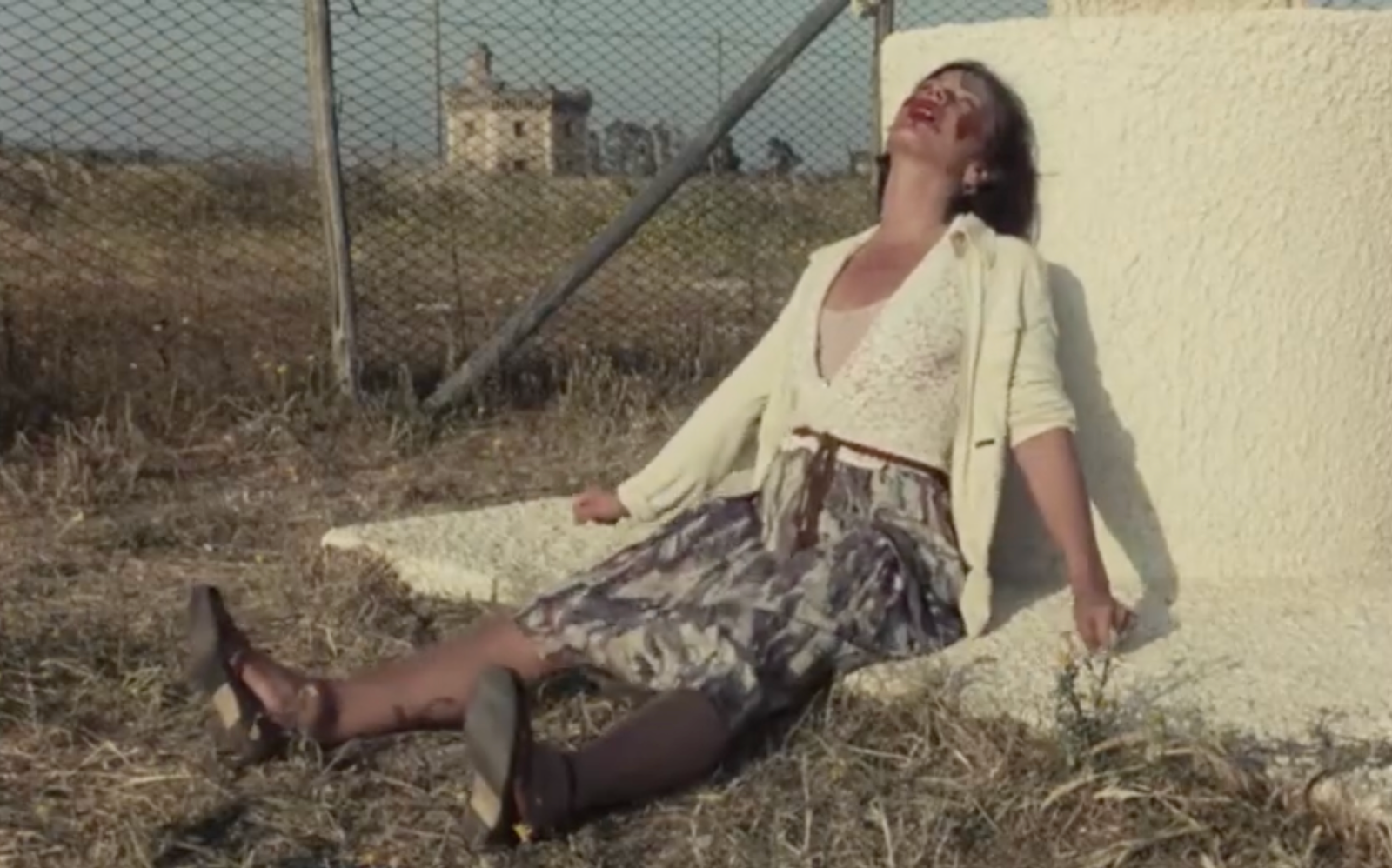
It has been nearly 50 years since Pasolini’s body was found on the beach at Ostia. In the film Amore Tossico (1983, dir. Claudio Caligari, Italy), two young heroin addicts overdose, draped together over the memorial to the director. Like the doomed characters of Caligari’s film, Pasolini’s posthumously collected Corsair Writings were written as raids on the public consciousness, steeped in the counter cultural capture of a moment when clandestine state actors were widely suspected of obscuring or enabling far-right terror, cultivating a sense of crisis that would come to define Italy’s long decade of uncertainty. This so called “strategy of tension" cannot be read in history books.
How do you categorise your average political assassin? Computers are seized by government agencies, who release the facts when and how it suits them. Can anyone be certain of the political signs that the Trump shooter, that the Charlie Kirk shooter, left floating in their virtual worlds? British police impregnated left-wing activists, the US government was all over 4chan, and the EDL still gets more cash from government agencies than Stephen Yaxley-Lennon knows what to do with.
This Anonymous Hollywood Superstar feels better for not believing MI5, but that’s just what they’d like...
When we can’t tell who is killing whom, or why, scapegoats are found and order must be seen to be enacted. Pasolini warns us of a “hasty” attribution of blame to those who are treated as “congenitally destined to become fascists,” the “eighteen-year-old boys… who plunged into this horrible adventure simply out of desperation.” Young men are blamed for violence but immigrants are blamed more; the Prime Minister invokes the fear of the illegal worker to justify a totalitarian digital ID system. When the confusion is mundane, when the sense of disorder is complete, when communities are atomised, it is imagined that fear will make them cry out for their own suppression. But an enlightened public does not have to ask for any protection that they are not already capable of giving to each other, and that’s a fact.
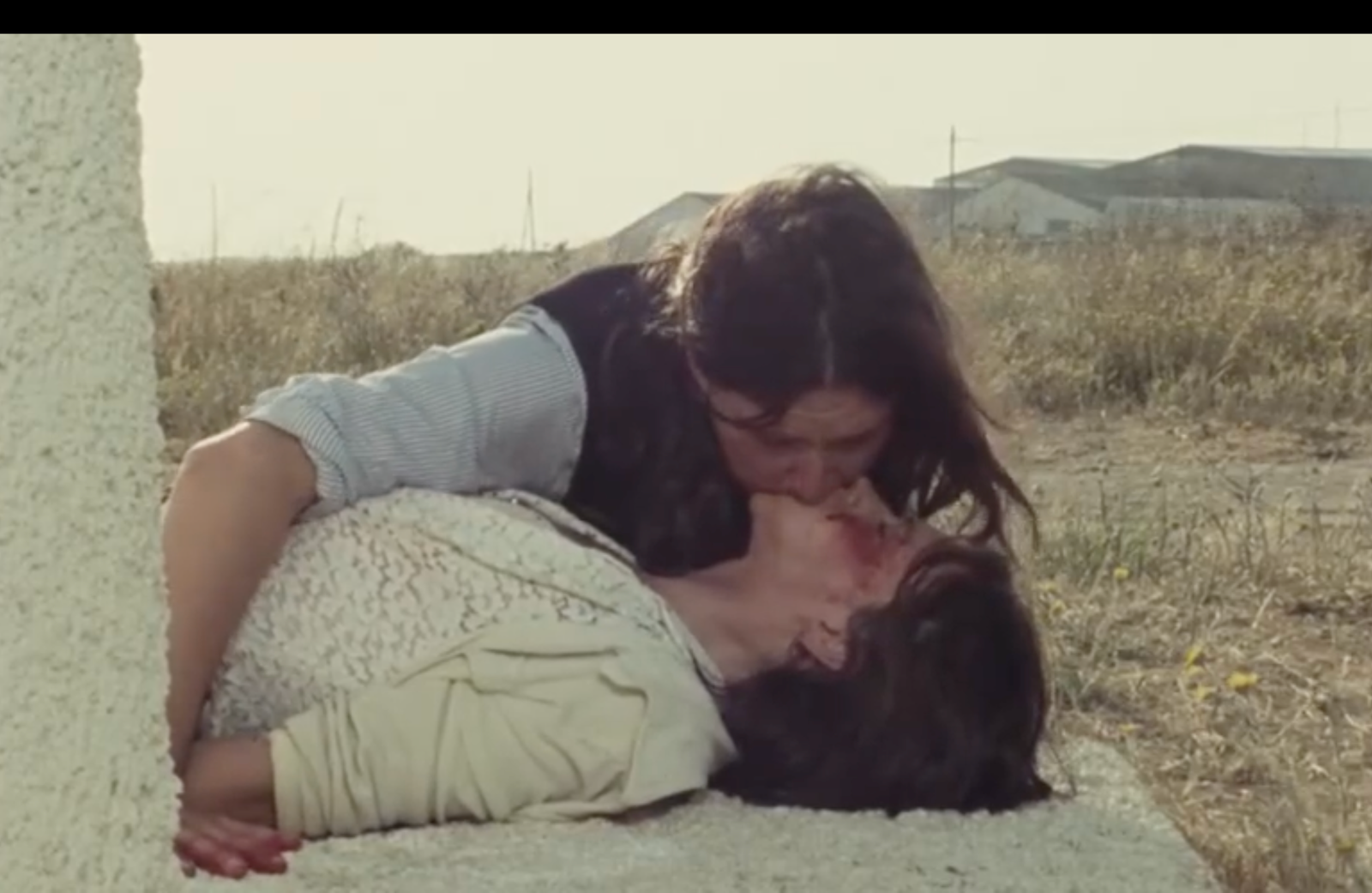
"The Discourse of the Longhairs"
January 7, 1973. Published in Corriere della Sera under the title, “Against the Longhairs”.
The first time I saw longhairs was in Prague. Two young foreigners, with hair hanging down over their shoulders, entered the lobby of the hotel where I was staying. They walked across the lobby and sat down at a table in a secluded corner. They sat there for about half an hour, observed by the customers of the hotel, including myself, and then they left. The whole time they sat there, and as they walked through the crowded lobby of the hotel, neither of them said a single word (perhaps—although I don’t recall right now—they whispered a few words to each other: but I suppose if they did it was something strictly practical and pedestrian).
In fact, in that particular situation—which was completely public or social, almost official, so to speak—they did not need to speak at all. Their silence was strictly functional. And it was functional simply because words were superfluous. Both of them, in effect, used a different language from the one that is composed of words to communicate with those who were present, with the observers—with their brothers of the moment.
What replaced traditional verbal language, rendering it superfluous—and immediately finding its place in the broad domain of “signs”, in the domain of semiology—was the language of their hair.
In a single sign—the length of their hair flowing down over their shoulders— all the possible signs of an articulate language were concentrated. What was the meaning of their unspoken and exclusively physical message?
It was this: “We are two longhairs. We belong to a new human category that is now making its appearance in the world, which has its center in America and which is unknown in the provinces (for example—indeed, above all—here in Prague). We are therefore an apparition for you. We are performing our apostolic mission, filled with a knowledge that is both totally overwhelming and totally exhausting. We have nothing to add orally or rationally to what our hair says physically and ontologically. The knowledge that fills us, as we perform our apostolic mission, will belong to you some day, too. For the moment it is something New, a great Novelty, which generates, together with scandal, expectation in the world: it will not be betrayed. The bourgeoisie are right to look at us with hatred and terror, because the length of our hair constitutes an absolute contradiction of their ways. But don’t think of us as uneducated savages: we are well aware of our responsibility. We do not bother with you, we keep to ourselves. You should do the same and await the unfolding of events.”
I was the recipient of this communication and I was immediately able to decipher it: this language that lacked a lexicon, grammar and syntax could be understood immediately, because, semiologically speaking, it was nothing but a form of that “language of physical presence” that men have always known how to use.
I understood, and felt an immediate dislike for both of them.
Later, I had to swallow my hostility and defend the longhairs from attacks by the police and the fascists: I was, of course, as a matter of principle, on the side of the Living Theatre, of the Beats, etc.; and the principle that caused me to side with them was a strictly democratic one.
The longhairs multiplied—like the first Christians—but they remained mysteriously silent; their long hair was their only real language and they felt no need to supplement it with another. Their language coincided with their existence. Ineffability was the ars retorica of their protest.
What did the longhairs say, with their inarticulate language that consisted of the monolithic sign of their hair, between 1966 and 1967?
They said: “Consumer civilisation nauseates us. We are protesting radically. We are creating an antibody against this civilisation by way of our refusal. Everything seems to be going smoothly, right? Our generation is supposed to be integrated, right? But take a look at how things really stand. We refuse to accept the insane fate of becoming ‘executives’. We are creating new religious values within bourgeois entropy, precisely at the moment when it is turning secular and hedonistic. We are doing this loudly and with revolutionary violence (the violence of the nonviolent?) because our critique of today’s society is total and intransigent.”
I don’t think that, if they were to be interrogated in accordance with the traditional system of verbal language, they would have been capable of expressing the meaning of their hair so articulately; but that is essentially what they said. As for me, although I have suspected ever since then that their “system of signs” was the product of a subculture of protest that was opposed to a subculture of power, and that their non-Marxist revolution was suspect, I still stood by their side for a while, finding a place for them at least in the anarchic element of my ideology.
The language of these longhairs expressed, although ineffably, Leftist “themes”. Maybe those of the New Left, born within the world of the bourgeoisie (in a dialectic that was perhaps artificially created by the Mind that rules, beyond the consciousness of particular historical Powers, the fate of the Bourgeoisie).
Then came 1968. The longhairs were absorbed by the Student Movement; they protested with red flags on the barricades. Their language expressed an increasing number of Leftist “themes”. (Che Guevara was a longhair, etc.)
In 1969—with the Milan massacre, the Mafia, the emissaries of the Greek colonels, the complicity of the government Ministers, the trama nera, the provocateurs—the longhairs were everywhere: while they were not yet the majority from the numerical point of view, they were dominant in terms of their ideological impact. Now the longhairs were no longer silent: they no longer delegated the totality of their communicative and expressive capacity to the system of signs of their hair. To the contrary, the physical presence of the longhairs was relegated, in a way, to a different function. They once again returned to the traditional use of verbal language. And I do not use the word, “verbal”, casually. In fact, I place special emphasis on it. They spoke so much between 1968 and 1970 that, for quite a while after that, they would no longer be able to speak at all: they devoted themselves to verbalism, and verbalism was the new ars retorica of the revolution (leftism, the verbal disorder of Marxism!).
Although the longhairs—re-immersed in their verbal storm—no longer addressed their agitated listeners in their former nonverbal way, I somehow summoned the power to sharpen my decoding skills and, amidst all the noise, I tried to focus on the unspoken discourse, evidently uninterrupted, of their hair that was always getting longer.
What did their long hair say now? It said: “Yes, it’s true, we are now speaking of Leftist themes; our meaning—while performing a purely secondary role in support of the meaning of our verbal messages—is a leftist meaning…. But…. But….”
The long-haired discourse stopped there: I had to finish it myself. With that “but” it evidently wanted to say two things:
- “Our ineffability is revealed to be increasingly more irrational and pragmatic; the preeminence that we mutely attribute to action is of a subcultural character and therefore essentially Right-Wing”;
- “We have also been adopted by the fascist provocateurs; they are mixing with the verbal revolutionaries (verbalism can lead to action, especially when it mythologizes it): and we constitute a perfect disguise, not only from the physical point of view—our disordered flowing and waving locks tend to make all faces look the same—but also from the cultural point of view: in effect, a Right-Wing subculture can quite easily be confounded with a Left-Wing subculture.”
In short, I understood that the language of long hair no longer expressed Leftist “themes”, but rather expressed something equivocal, something that was Right-Wing/Left-Wing, which created a situation that made the infiltration of provocateurs possible. About ten years ago, I thought, among us—the preceding generation—a provocateur was almost inconceivable (unless he was a magnificent actor): his subculture was different, even physically, from our culture. We would have known him by his eyes, his nose, his hair! We would have exposed him immediately and we would have immediately taught him the lesson that he deserved. Now this is no longer possible. No one in the world can distinguish a revolutionary from a provocateur by his physical appearance alone. Right and Left have merged physically.
And then came 1972.
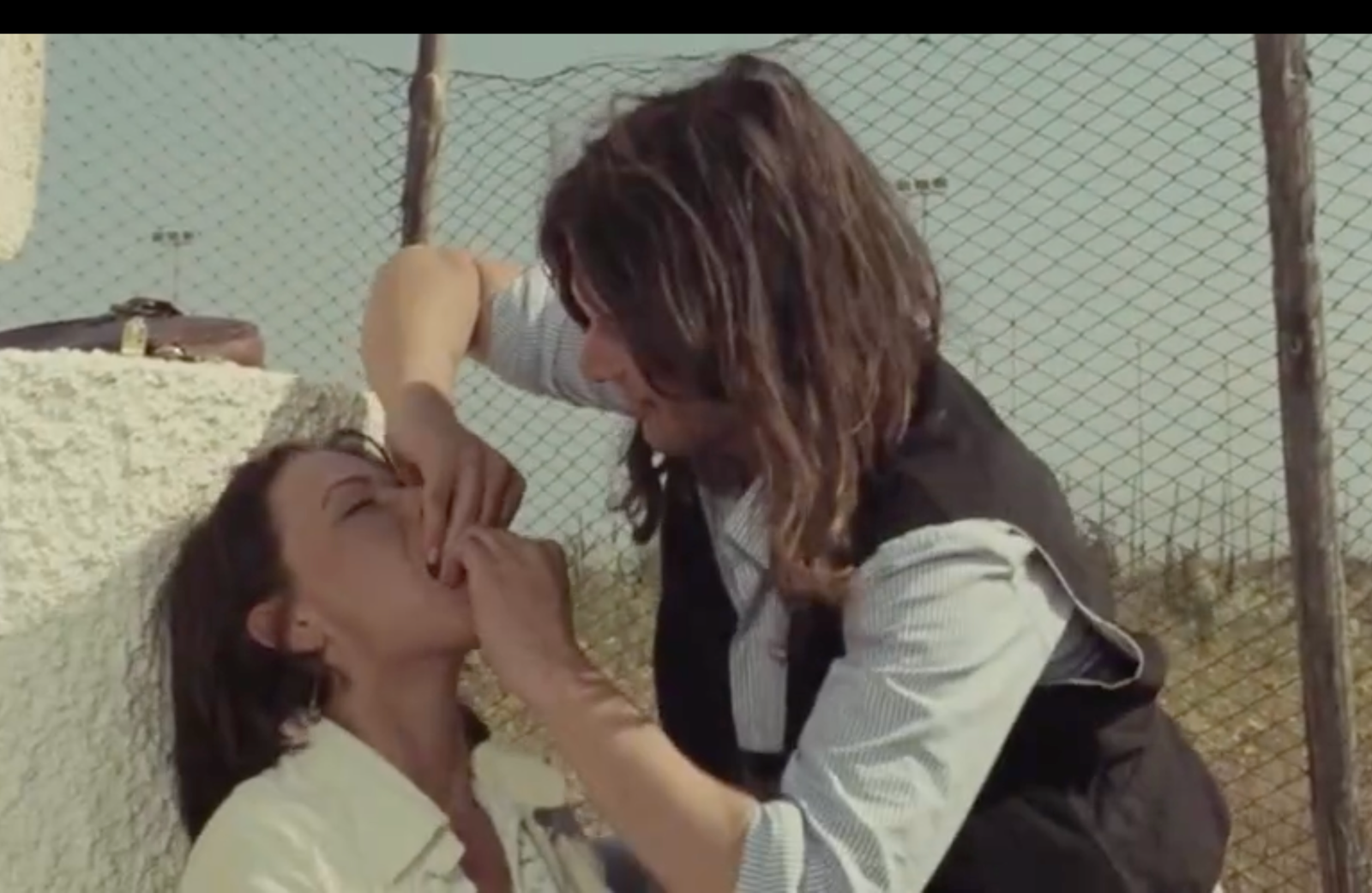
In September of that year I was in the city of Isfahan, in the heart of Iran. An underdeveloped country, as the horrible expression goes, but also, to use an equally horrible expression, a country on the path of development [in pieno decollo—“taking off”].
Upon the Isfahan of ten years ago—one of the most beautiful cities in the world, maybe even the most beautiful—a new Isfahan has been built, modern and horribly ugly. On its streets, however, on their way home from work or just taking a walk, towards evening, you see the kind of young men you used to see in Italy about ten years ago: humble and dignified boys, with their smooth necks, their nice clean-shaven faces under their proud shocks of hair. And one evening I saw, walking down the main street of the city, among all those old-style, beautiful young men who were so radiant with an ancient human dignity, two monstrous beings: they were not exactly longhairs, but their hair was cut in the European style, long in the back, short in the front, drawn back and artificially slicked down around their head with two ugly shanks of hair pasted back over their ears.
What did their hair have to say? It said: “We do not belong to these starving masses, these miserable underdeveloped paupers, held back in the age of barbarism! We work at the bank, we are students, sons of rich people who work for the oil companies; we have been to Europe, we read books. We are bourgeoisie: and here is our long hair that testifies to our privileged international modernity!”
Their long hair therefore alludes to Right-Wing “themes”.
The cycle has come full circle. The subculture of power has absorbed the subculture of opposition and has made it its own: with diabolical skill it has patiently transformed it into a fashion that, if it cannot be called fascist in the classic sense of the word, is nonetheless really a phenomenon of the “extreme right”.
And so to my bitter conclusion. The disgusting masks that the young men put on their faces, making them look obscene like old whores from an absurd iconography, objectively recreate in their physiognomies only what they have themselves always condemned: reminiscent of the old faces of priests, judges, government officials, false anarchists, court jesters, pettifogging lawyers, Don Ferrantes, mercenaries, swindlers, self-righteous weirdos. The radical and indiscriminate condemnation that they pronounce against their parents—who constitute the evolving history and prior culture—by erecting an unbreachable wall against them, has ended up isolating them, preventing them from attaining a dialectical relation with their parents. Only by way of this dialectical relation—even if it is dramatic and extreme—can they attain to a real historical consciousness of themselves and advance beyond, or “supersede”, their parents. Instead, the isolation in which they have enclosed themselves—like a world apart, a ghetto reserved for young people—has severed them from their undeniable historical reality: and it has implied—inevitably—a regression. They have actually regressed from the position of their parents, resurrecting in their souls the terrors and conformities and, in their physical appearance, conventionalisms and miseries that once seemed to have been finally abolished forever.
Now the longhairs are repeating, in their inarticulate and obsessive language of non-verbal signs, in their underworld iconography, the “themes” of television or advertising, where is it currently impossible to find a young man without long hair: something that would today be scandalous for power.
It causes me sincere and immense displeasure to say this (in fact, true desperation): but now, tens of thousands and hundreds of thousands of the faces of Italian young men are looking more and more like the face of Merlin the Magician. The freedom to wear their hair as long as they like is no longer defensible, because it is no longer freedom. The time has come to say instead to our young men, that the way they wear their hair is horrible, because it is servile and vulgar. The time has come for them to wake up and free themselves of this guilty, anxious yearning to conform to the degrading order of the horde.
Here is one, for example. In the article that gave rise to this controversy (Corriere della Sera, June 10, 1974), I said that those who were really responsible for the Milan and Brescia bombings are the Italian government and the police: because if the government and the police had wanted to prevent them, these attacks would have never taken place at all. This is a commonplace. So, at this time, I will definitely get a few laughs by saying that we, too—progressives, anti-fascists, leftists—are responsible. In fact, in all these years we have done nothing:
because talk of “State-sponsored massacres” did not become a commonplace and everything stopped there;
(and more serious still) we have done nothing because the fascists do not exist. We have condemned them only to gratify our conscience with our indignation; and the more strident and petulant our indignation the more tranquil our conscience.
In reality we have behaved towards the fascists (I am speaking here only of the young ones) hastily and therefore ruthlessly, we wanted to believe that they were congenitally destined to be fascists and, faced with this predestination, there was nothing we could do. And let us not deceive ourselves: we all knew, deep down, that when one of these youths decided to become a fascist, it was purely by accident, it was nothing but a gesture, unmotivated and irrational; one word might have been all it would have taken for this not to happen. But none of us ever spoke with them or to them. We immediately accepted them as inevitable representatives of Evil. And maybe they were adolescents, eighteen-year-old boys, who knew nothing about anything, who plunged into this horrible adventure simply out of desperation.
But we were incapable of distinguishing them from the others (I am not saying that we could not distinguish them from the other extremists, but from everyone else). And this is our appalling justification.
Father Zosima (literature for literature’s sake!) was immediately able to distinguish, among the crowd of people in his monastery’s reception room, Dmitry Karamazov, the parricide. Then he rose from his chair and prostrated himself before him. And he did so (as the younger Karamazov later said) because Dmitry was destined to perform the most horrible act and to endure the most inhuman suffering.
Think (if you have the courage) of that boy or of those boys who planted the bombs at the public square in Brescia. Wouldn’t it be necessary to get up and prostrate oneself before them? But they were youths with long hair, or with Edwardian moustaches, they wore headbands or maybe a cap pulled down over their eyes, they were pale and presumptuous, they were obsessed with dressing fashionably, all alike, to have a Porsche or a Ferrari, or motorcycles so they can drive them like little idiot archangels with their ornamental girlfriends behind them, yes, but modern, in favour of divorce, of women’s liberation, and of development in general….
They were, in short, young people like all the rest: nothing distinguished them in any way. Even if we wanted to, we would not have been able to prostrate ourselves before them.
For the old fascism, even if only by its rhetorical degeneracy, stood out: while the new fascism—which is completely different—has no outstanding qualities at all: it is not rhetorical in a human way, it is pragmatic in the American style. Its goal is the brutally totalitarian reorganisation and homogenisation of the world.