"We experienced complete context collapse on Henry St" Review of Q3, Alyssa Davis Gallery and Problem Child Advisory, NYC
Review / 29 October 2025 / By: Al R. Sawit / ★ ★ ★ ★
Q3 Curated by ProblemChild Advisory
September 4 - October 19, 2025
Albert R. Sawit takes us on a journey through "Q-3", an exhibition curated by Problem Child Advisory - another psychologically tortured and semi-autonomous guerrilla art Instagram page - and Alyssa Davis Gallery, the renowned nomadic downtown gallery that’s been curating shows with chic posters since 2016. “Q-3” is a reference to the third quarter of the fiscal year, paired with a selection of artworks whose summary could be described as "post-internet" and "girl-art", "digital grotesquerie" and “machinic fetishistic art akin to transformer toys”. Together, they generate an exhibition geared unabashedly toward Silicon Valley cash flow. Digital solutions to real art world problems!
Featuring work by Diego Gabaldon, Kyle Gallagher, Nina Hartmann, Leif Jones, Gyae Kim, Danka Latorre, Jack Lawler, Sean David Morgan, In June Park and Cameron Spratley
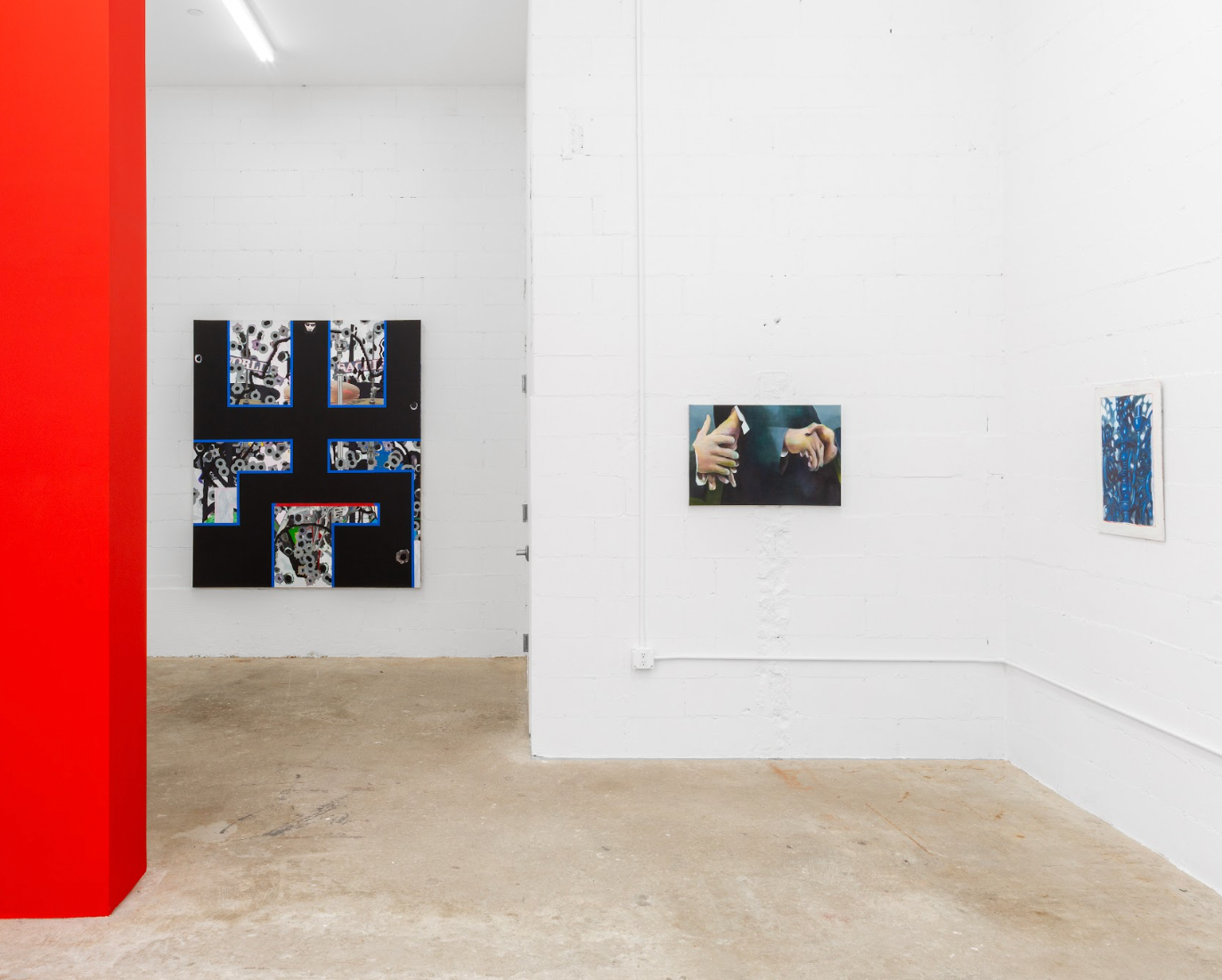
We experienced complete context collapse on Henry St. My father and I, like many of the others assembled on the sidewalk for Q3, had attended the Armoury Art Fair beforehand. By the time an ‘art world enthusiast’ arrives at the exhibition, they have probably seen close to 100 small shows in the form of individual booths dotted across several fairs. Perhaps a few more cohesive openings in Tribeca or Chinatown.
It would be safe to say these viewers have encountered 500 works of art, easily destroying any strong or certain idea about what world we exist in by the time we got to the show. Outside of Q-3, there was a different kind of crowd - dirtier and younger – some kids blowing smoke across the sidewalk, baseball caps with frayed edges – more cargo pant pockets than I care to recall – and the kind of Chinatown glitter that sees rhinestones all over everything – hats, tees, and teeth. Who is Problem Child Advisory? A seemingly ownerless, Instagram-centric sort of whose-who type of visual storytelling-based insights on art, whose niche (or populist) selection of internet artists draws an above-average crowd.
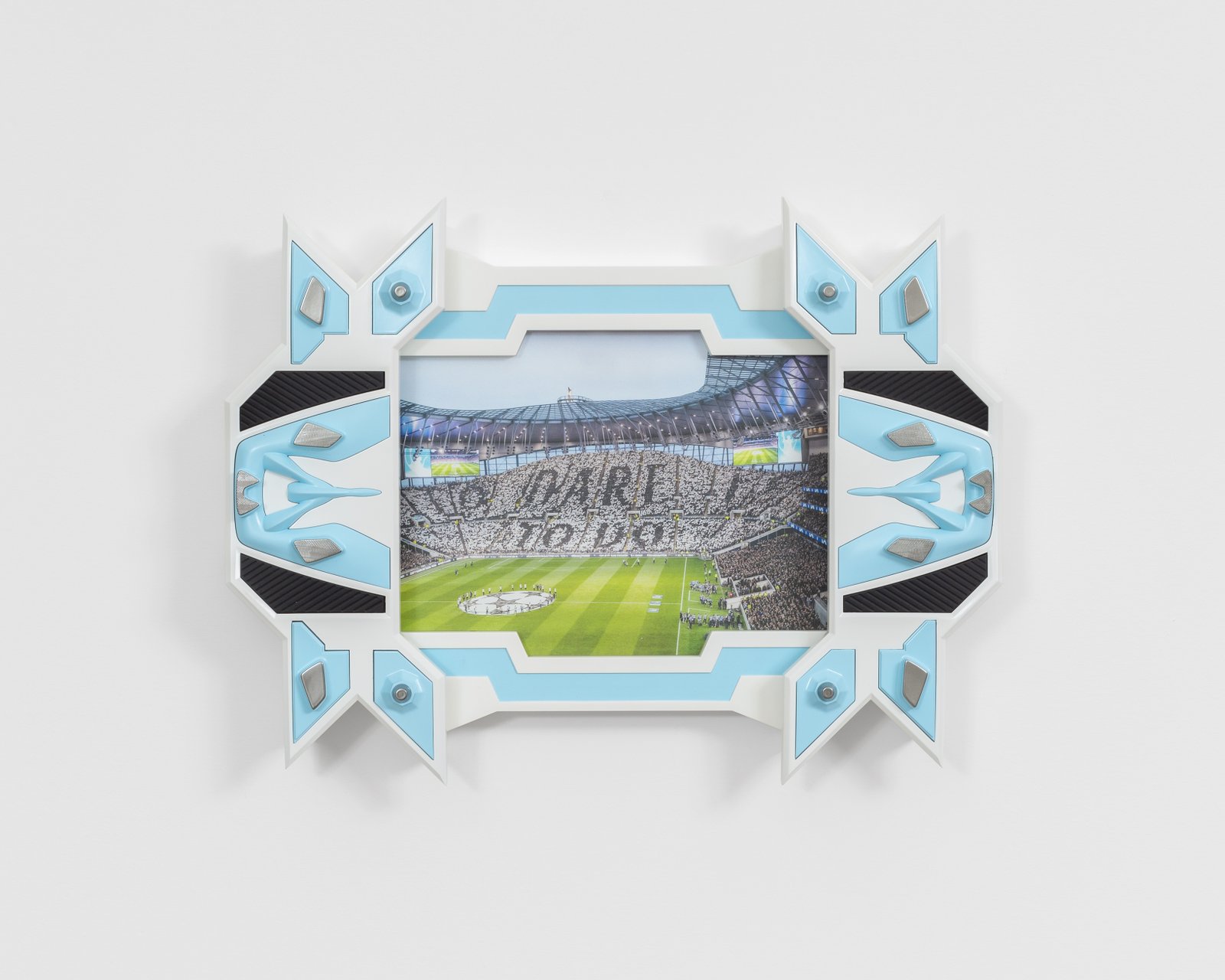
The first thing to grab my attention was a picture frame that looked like it had been made in an auto body shop, Diego Galbadon’s SPEEDFRAME (1,2, and 3) 2025 series. It was as if the people who made the car from Speed Racer had a side hustle in framing. Macho-centric, jacked-up accelerationist framing that appeals to both the consumer critical CSM graduate and the technocrat. Galbadon’s obsession with sport as ritual is reflected in the gargantuan architecture of his framing device, like a baroque baldachino.
I was moving a bit too quickly to actually stop in my tracks, but I did take a picture. Upon further inspection of the image, I realised it was a soccer game – or a rendering of one, with the words "DARE TO DO" spelt out by the fans in the crowd. It was a commentary on the sports industrial complex: the commemorative cups, the scarves, the sea of inevitable merch that comes with being at the top of your ‘field’. The most important part of this deluge of liquid merch is the container that holds it all together - a stadium. Like the football stadiums that accompany the most notable empires, the frame becomes this celebration of the work inside, a protector, a reminder, but most importantly, an indicator of value. V Q3.
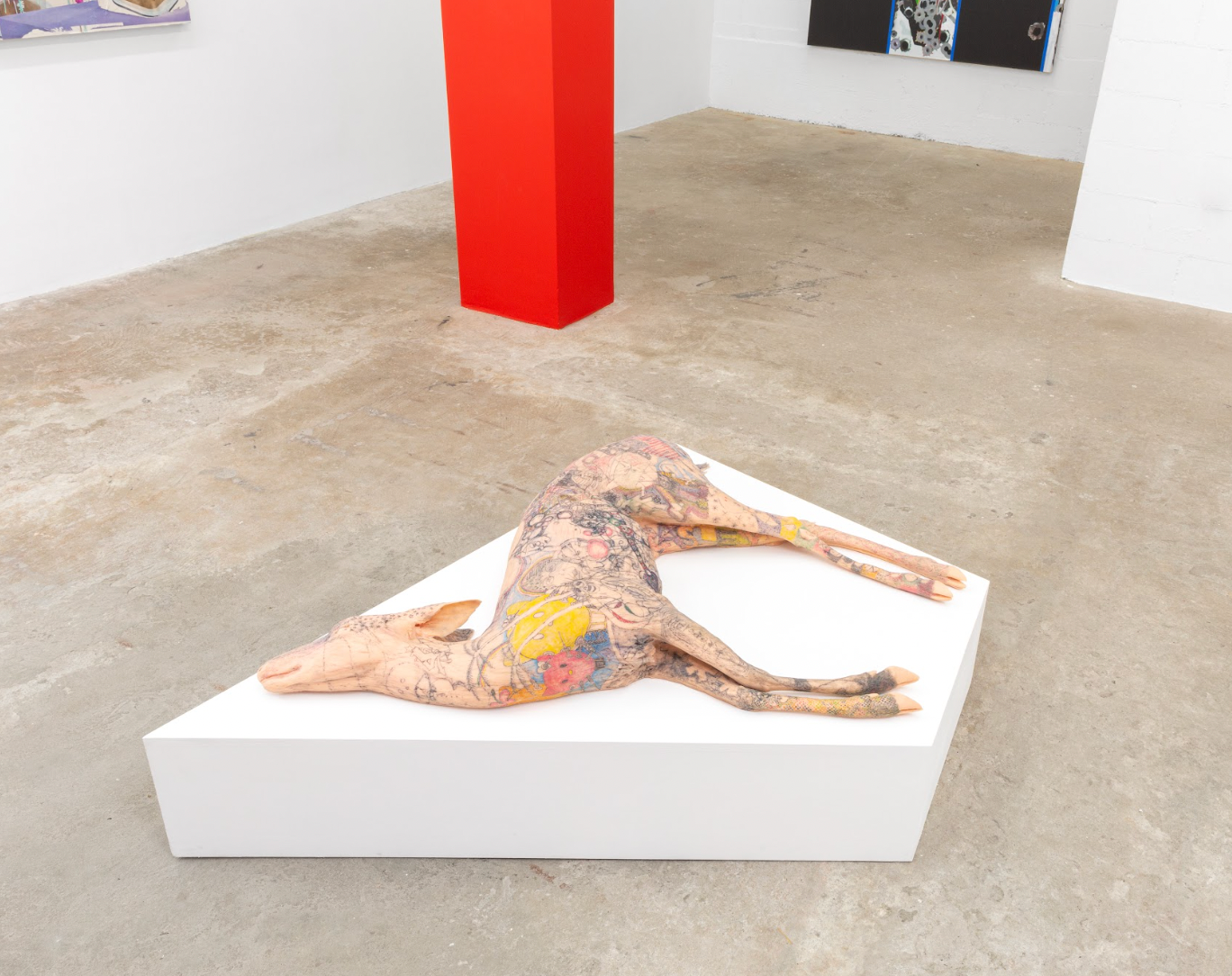
The next attention grabber was a furless, silicone deer, covered in overlapping tattoos. Leif Jones, Bed Bugs Cure Laziness (Deer 1) 2025. A work which also appears on the cryptic Instagram account of its maker @leifffffffffffffffffffffff. The tattooed skin recalls a bad stick and poke given by friends - the sort of Instagram grid post to go triple platinum on drainer feeds.
The last work I’ll bring up is a painting I liked because of its transparency and honesty. Sleight of Hand 2025 by the artist In June Park. It was a simple airburst image of a few handshakes occurring simultaneously; it stood out as a reminder of forced exchanges. The art world is for rich white people – it is their playground, and we are all just here because of their ego. No matter how much we stylise or abstract the narrative, at the end of the day, the art world is about creating capital and moving it through various systems so it can accumulate value. Sleight of Hand alludes to the vectors of financial manipulation, but to its formal qualities: slight blurring, JPEG light texture, creating an impression of artists' increasing freedom through digitality.
All of the works in Q-3 can be categorized as "Net Art" - Problem Child Advisory surpasses the traditional gallery system - in a way - by sourcing artists outside of the network, defying the brick and mortar space, Sam Altman style. The works speak to each other through unfiltered internet language - this isn’t super flat - or digitality prematurely re-packaged as a movement, these are, and I quote, a purportedly “anti-establishment” and “anti-gate-kept” forms of art making.
Does this mean that if you see a work on the Problem Child Advisory Instagram, and like it, you can just purchase from the artist directly? Curating in works such as Sleight of Hand (2025) suggests that cutting out the middleman might be welcomed by the page. Would love to know if this is actually the case. Slide in our DM'S.