Review / 21 February 2026 / By: Veronika / ★ ★ ★ ★
"I DIDN'T MEAN IT LIKE THIS, OK?" Review of Legacy at Pivot
CAVEAT by Sydney Sweeney on "Pivot"
In their shows so far this year...
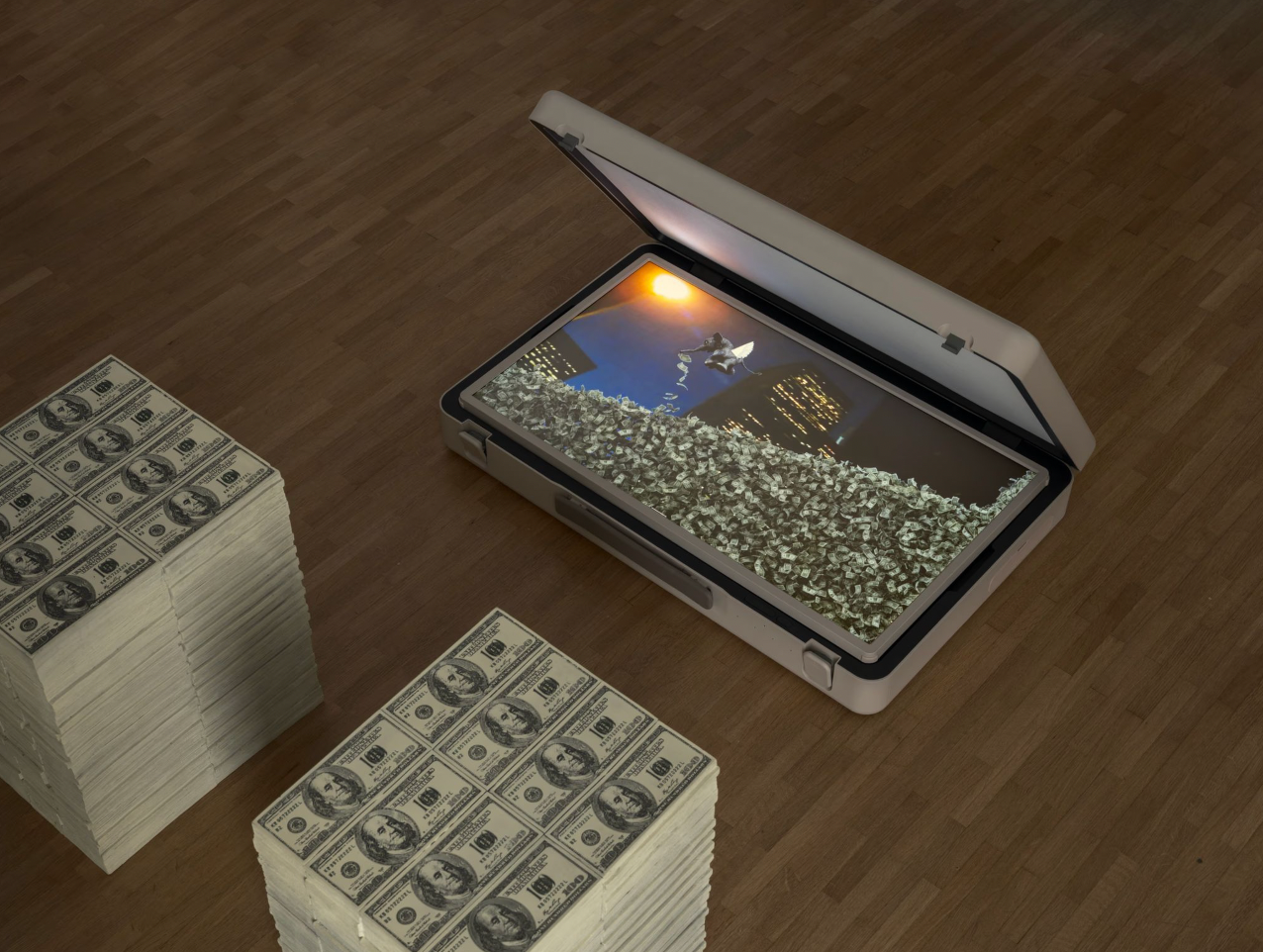
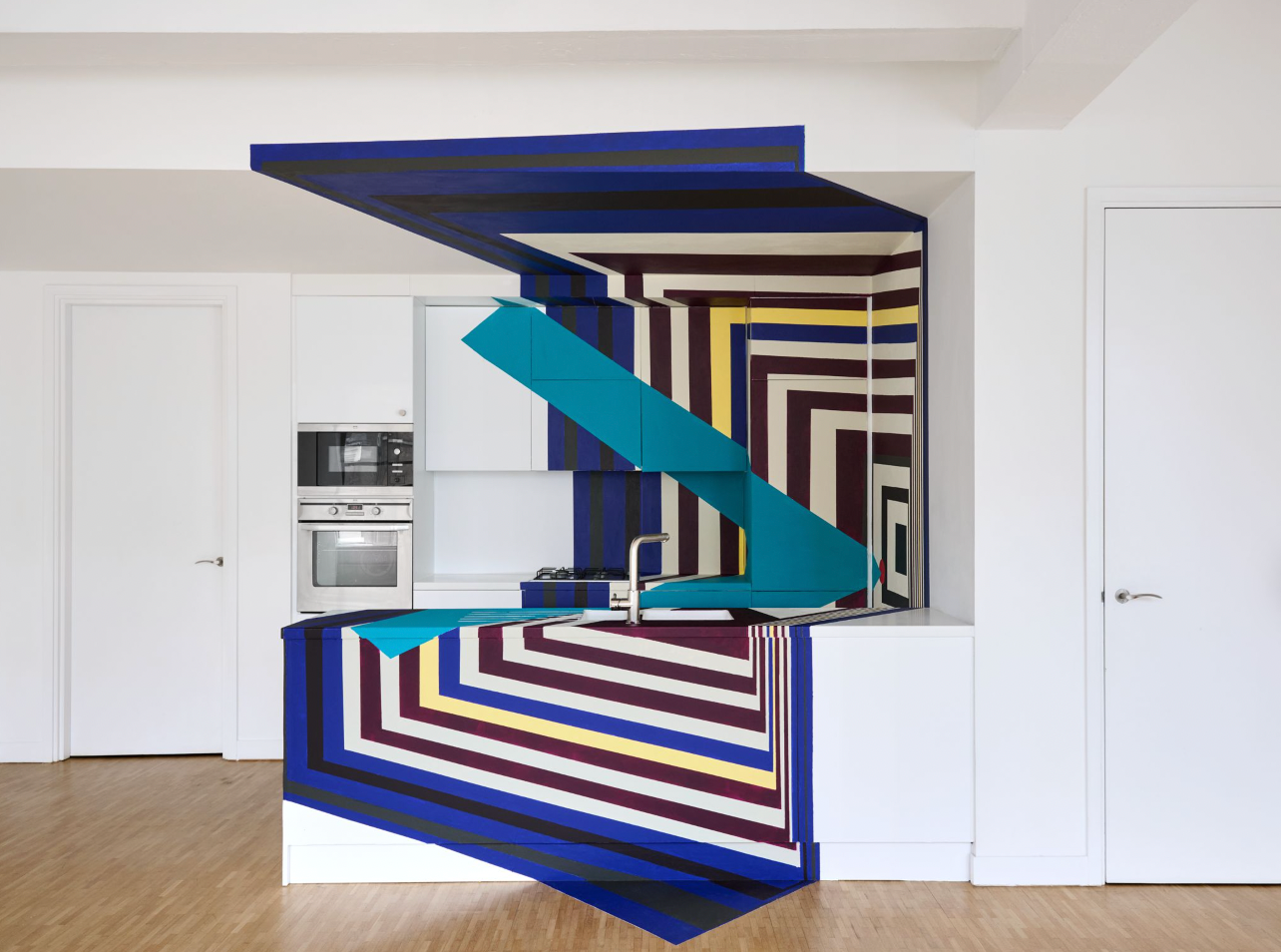
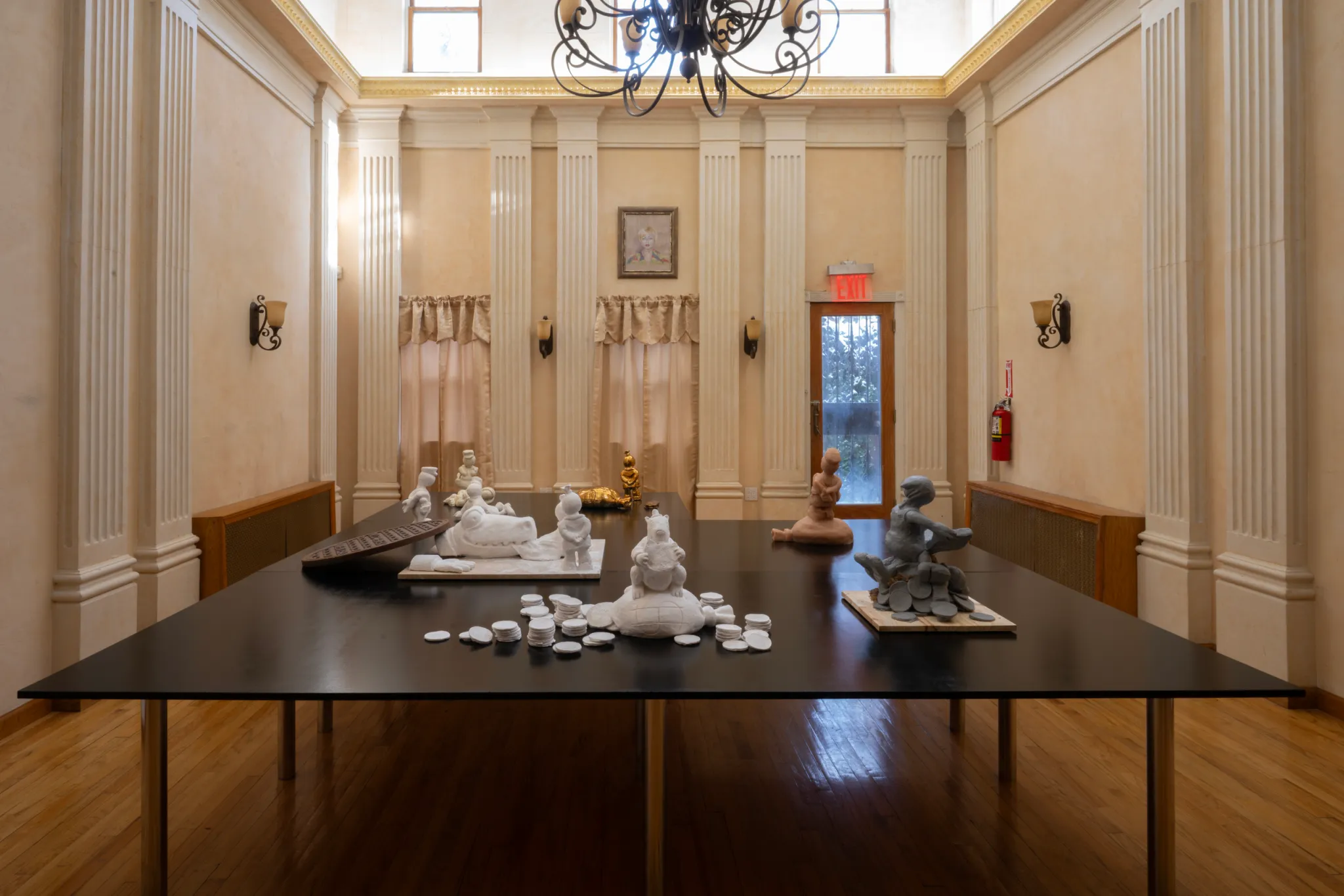
...held in a chic, if unattainable Farringdon apartment - the two have managed to break through the fourth wall of bad curating by early twentysomethings. In 2025 - they did 6am with a briefcase LED work by Marc Kokopeli, which invited visitors to sit on literal money stack chairs while Nancy Dwyer presented a curved canvas mounted where the kitchen-telly (a symbol of aspirational wealth in the late 00's) would be. Then, in Legacy - well, Lana talks about that below - but most recently Pivot, with Gretchen Lawrence and Margaret Tashkova (ostensibly the same person) re-visits the domestic bending potential of the Pivot space with a painted Vinyl geometric spatial illusion.
The women bring a very non-english chicness to the small gallery playground - and a very real opportunity for artists to inhabit an entire space without the pressure of saleability. More of this in 2026 I think, in fact, I know, as increasingly small galleries move on from sales toward inhabiting a chicer verison of the "Project Space".
High rent kitchen gallery in central is London's alternative to the Kunstverein. When asked to comment on being ingenue's, they responded: "Look at your hands as long as you can and then dm us".
Pivot's commitment to showing full-scale sculptural immersion and continued rejection of the kitschy painted group show (sorry to flog a dead horse hollywood is just anti-painting rn) makes me think that maybe if the white cube is over - the mid century modern white space apartment is inhabiting its place?
Review of Legacy: Lana Von Thorn, at Pivot
November 23, 2025 - January 18, 2026, London
In the best traditions of internet minimalism, Legacy proposes communication as a binary that should be easy to understand. It stages a dialogue that looks simple, almost harmless, until you stand there and realise how invasive a question can feel, and how unstable an answer can become.
When I enter an apartment—be it my own, or one where I am only a guest—I expect to feel a
certain comfort. These apartment galleries are no exception to this expectation - I refuse to believe that the entities living there are
curators; I believe they are animate, real people who require some kind of cosiness to live
cheerfully. As Legacy, Lana Von Thorn’s exhibition at Pivot, the so-called APARTMENT gallery, prohibited any sense of domestic amenity.
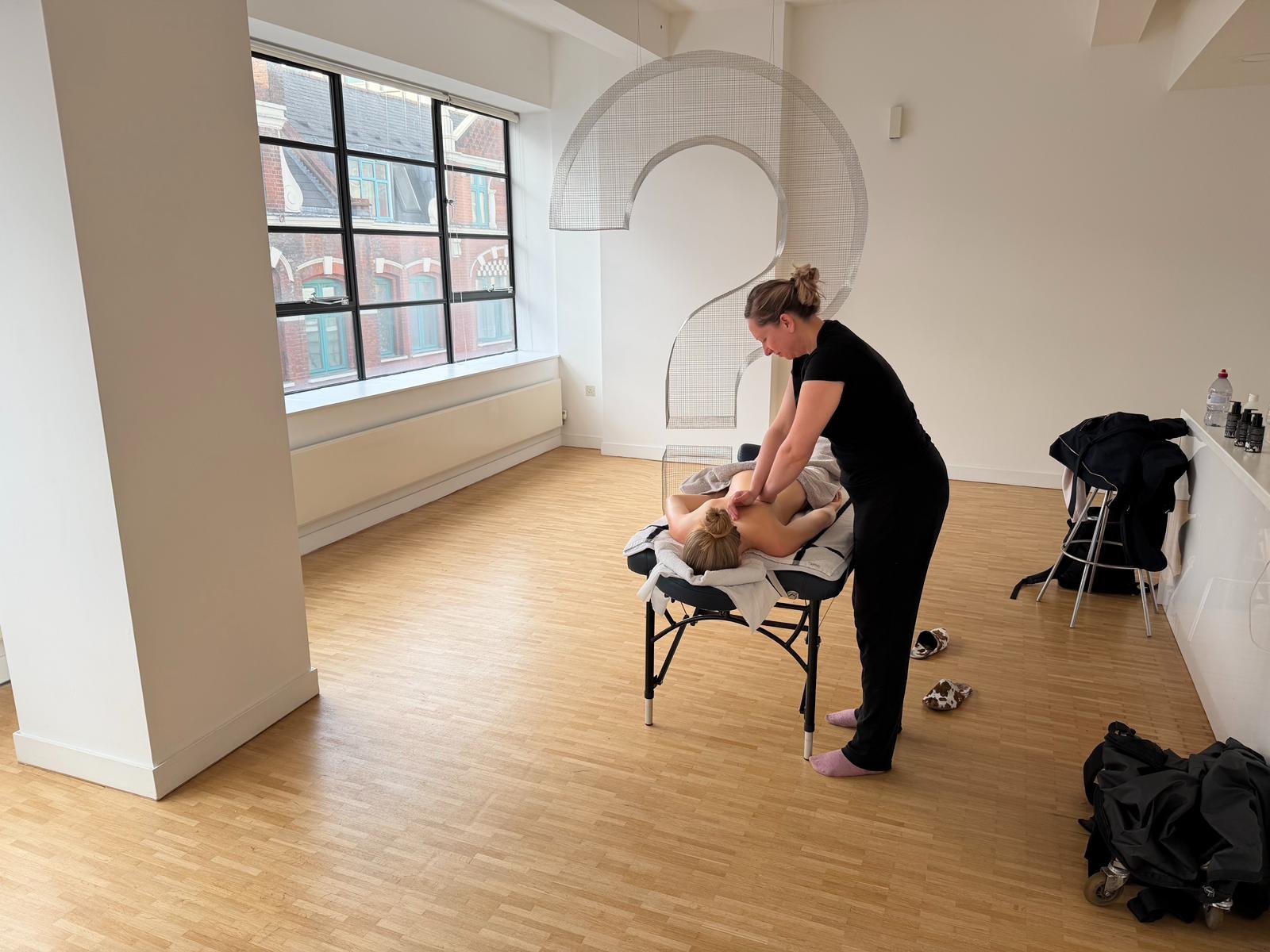
As I stepped inside, in the living room, I was confronted with a large question mark: a wire-mesh structure (way larger than an ordinary young lady) lingering apathetically in the air. Its presence is intimidating, as the question impliedfills the room with existential discomfort.
I hate being asked questions; they invade my
personal space, and for this moment, I feel like a child at a family gathering, some unknown,
unnamed aunt asking me what I plan to do after school.
The intrusion imposed by Von Thron’s work is similar to one, famously directed by Jenny Holzer’s Truisms (1978–87), a series of text-based installations that inject themselves into public space with brief, provocative maxims. In daily life, there is never a need to encounter such atrocious confrontations, yet they find us somehow; they somehow appear.
I hate it here.
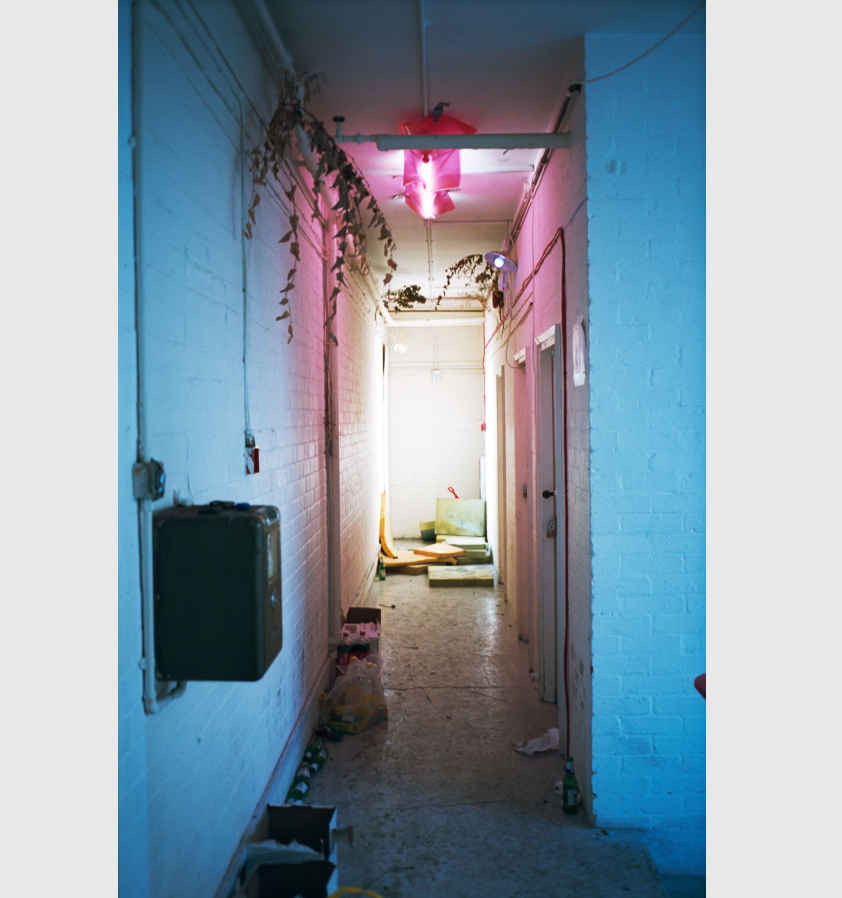
I move through a long, windowless corridor, an architectural pause, reminiscent of the liminal space between a question
and an answer. The emptiness of this passage does not soften the
experience; it sharpens it. It is not a neutral space, but an uncomfortable delay between being
confronted and being able to respond.
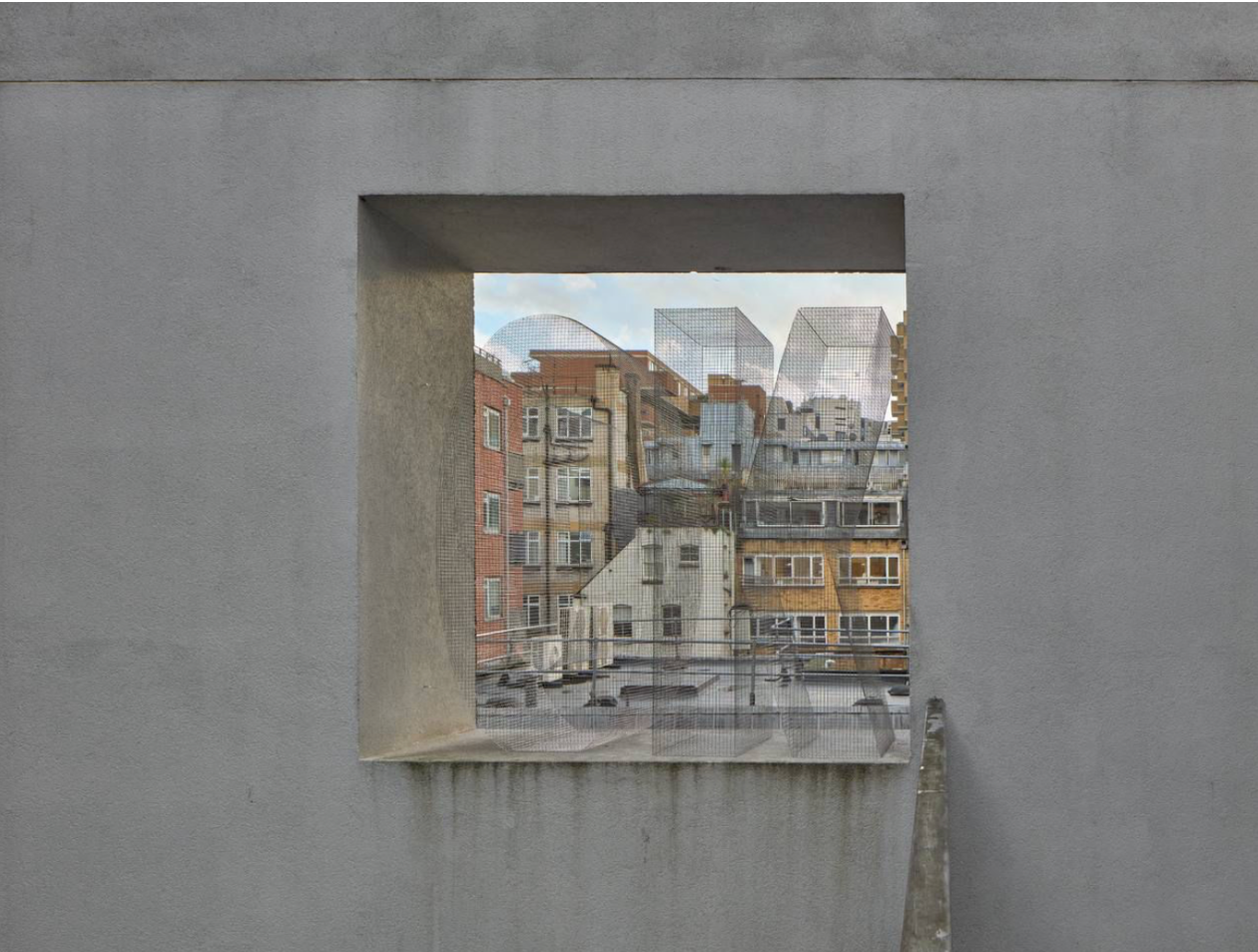
On the balcony, placed in an opening in the wall of the opposite building, sits the “ok”—a simple
word, an icon even. Its clarity, though, is unbelievably relieving.
It uses the sky as its substance for the otherwise empty carcass. It becomes an active participant in creating the sweet-sweet taste of relief.
The weather and time of day shift its tone, giving the “ok” a specific liberty of expression and comprehension, despite the limiting
nature of its form. This answer provides closure in its simplicity, yet remains fragile—its
meaning can turn tender or cold with only a change of light.
– I didn’t mean it like this.
– OK.
It is known to be the smallest possible emotional statement that is still legible and has rightfully earned its place as an ephemeral typographic object, a linguistic button. And while it is highly context-dependent (or in this case meteoropathic), it serves as a signal, saying I acknowledge ___ without declaring.
Lana Von Thorn’s work’s physical emptiness brings me to a feeling reminiscent of the absence of presence described by Ivan Tcheglov in his Formulary of a New Urbanism (1953).
The transparent wire mesh accentuates this distress, questioning the reality of the dialogue the sculptures represent. A question mark and its corresponding “ok” are not simply symbols; they are structures that contain nothing and somehow still overtake both physical and semiotic space.
Pivot’s apartment setting makes this mediation unavoidable. There is no distance, no white
cube neutrality, no escape into detachment. The work unfolds at the scale of the body, in the
language of domestic space, making the viewer’s response part of the exhibition’s logic.
In the end, Legacy is not asking us to decode a message. It is asking us to recognise ourselves in the discomfort of being questioned, and to consider how often a hollow “ok” doesn’t serve a function as an emotional exchange, but signals the absence of communication
My only suggestion: next time, try using a 👌emoji, it might feel nicer.