Reviews

Review / 15 September 2025 / By: Green BIrkin / ½

“Good Show For The Gays" Review of Selected Works 1978 - 2000 @ 15 Orient

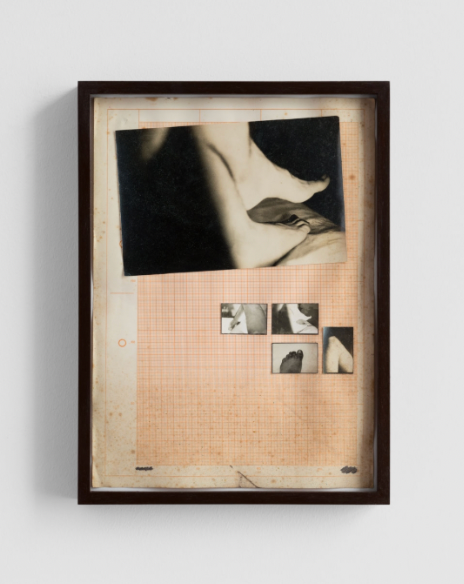
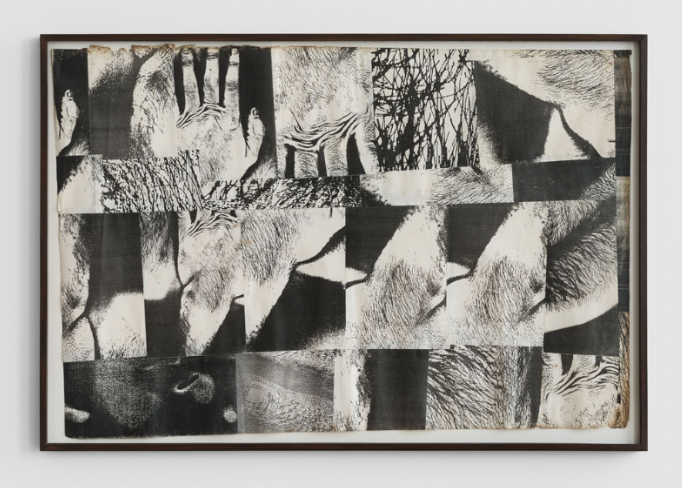
Just as I was starting to get tired of the same shade of beige that seems to wash over every 15 Orient show - I was granted a great show of Hudinilson Jr's exploration of material, queerness, assemblage, abstraction, movement. Above all, a sense of the artist’s own historicity.

One thing about this show I enjoyed was Hudinilson Jrs. use of the Xerox copier in conjunction with bodily movements, that were then integrated into drawings, collages, etc.

Throughout the show it felt like I was involved in understanding his process, research, and culmination of it all, to a body of work that felt heavily considered. A good show for the gays.


Review / 15 September 2025 / By: Green Birkin / ½

"If You're Gonna Paint Spiderman Getting His Dick Sucked" Review of Revolve @ Market Street Gallery, NYC

Directly lifted from the press release:

"Reclaiming space,”
“a tribute to New York's layered art ecology,”
“a statement of presence”.

There is a reason why the press release reads as horribly as it does, and that's due to a majority of the works falling short of aligning themselves with any of the aforementioned phrases. Perhaps due to the emptiness of these phrases (used ad-infinitum) in today’s art-speak lingo.

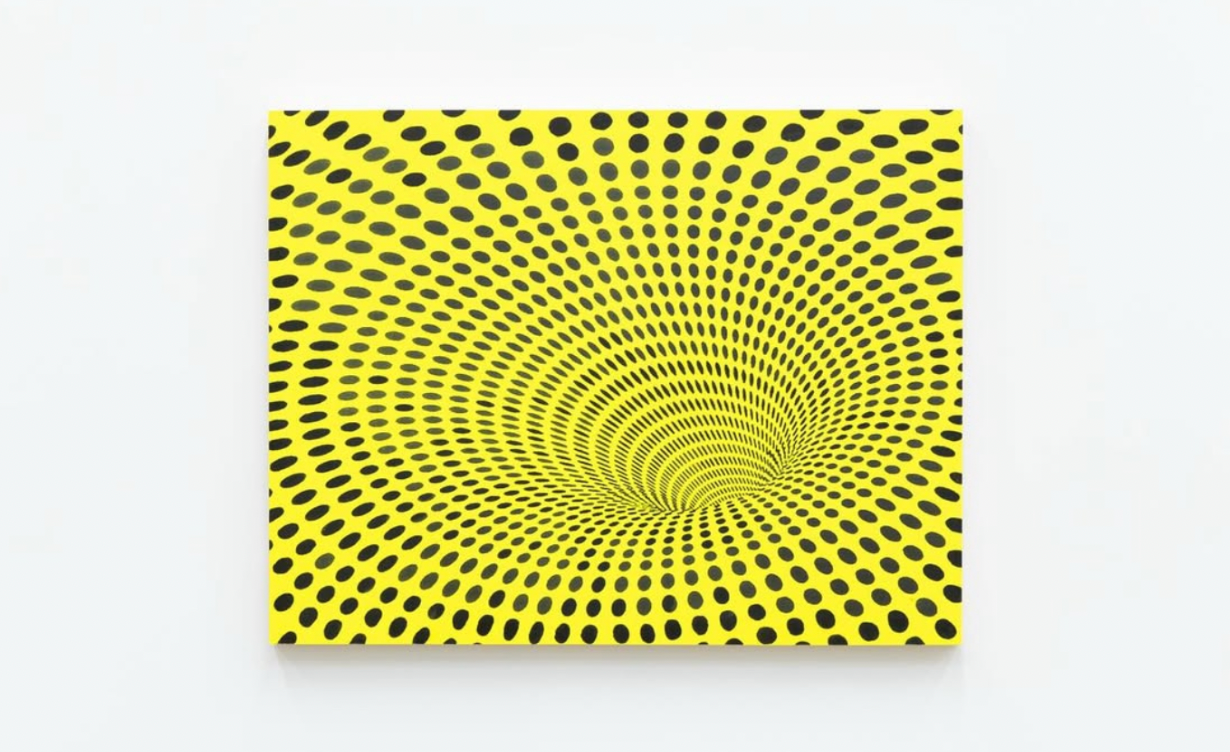
I’ll give credit where it’s due, work by artists like Amanda Ba, Cannibal (2025), Tucker Van der Wyden Spiral 3 (2024), Eli Tamarkin Girls (2024), Kembra Pfahler Wall of Vagina II (2004/2018), Aramando Nin, Maggie Lee, Sassy (2024) - great.

Obviously, you throw the New York kids a bone with works from Dash Snow, Young Men with a Future (2007) and Mike Kelley, Extra Curricular Activity Project Reconstruction (2004-5). Predictable.

Yet, unfortunately, if you have also watched this show via an Instagram story post and decide to see the works in person, you’ll walk away with an appreciation of perhaps a few names, but mostly an appreciation for art that is not on display at Market Street.

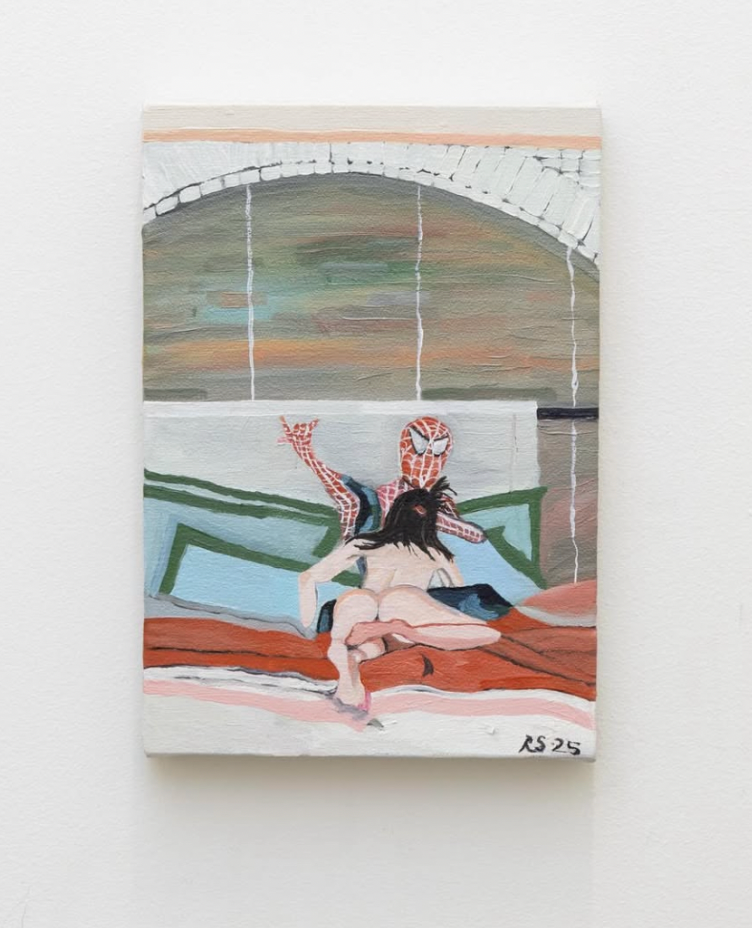
It’s a predictable show with predictable work, and if you were going to paint Spider-Man getting his dick sucked, at least spare oil paint and use acrylic.

A lot of these works play into the aspect of a “storefront spectacle” as the gallery describes, so much so that Revolve reads more as a “pop-up” store than an exhibition. The works inside are akin to the miscellaneous, mass-produced items for sale in American Candy stores and Soho tourist traps: their bright, eye-catching colours admonish viewers for their short attention span.

Made possible with support from Supreme NYC


Review / 14 September 2025 / By: Catherine Zeta-Moans /

"Sceneology" A review of Body Count By Catherine Zeta-Moans

I always found it interesting how “art people” dressed.

Body Count - an exhibition by Miriam Simanowitz and Thibault Aedy - imagines individual style as it looks online rather than “IRL”. London-contemporary-young-up-and-coming art scene {that incorporates fractals and subcultural visuals hailing from Camberwell, Goldsmiths, CSM, UCL and UAL et al until ad infinitum] may appear as though they have been transplanted from the 2010s. The reasons for this are twofold: a desire to return to a pre-META Utopia and the all-too rapidly ageing Generation Z. The first work in the show, Miriam Simanowitz’s Mise En Scene (2025), supposedly mocks this dress code.

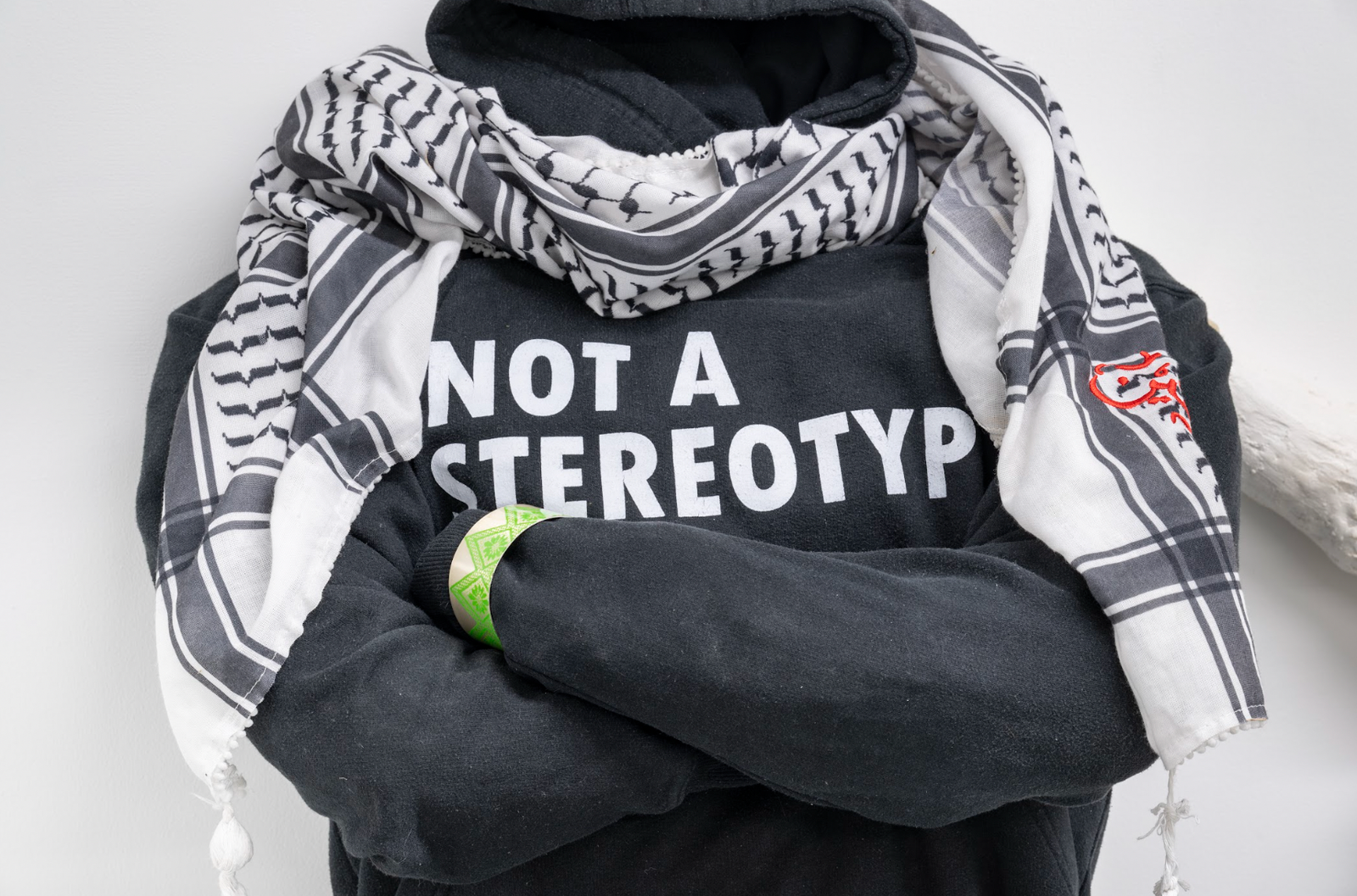
Simanowitz squeezed her friends’ pelvises, elbows, and spines to gauge the size of their bones before recreating them in metal and covering them in plaster. The result is an almost unrecognisable, disturbingly uncanny deviation from real life. To dress them, Simanowitz opted to trawl Vinted - an app that has overtaken Zara in volume of sales in France, due to the success of its algorithm. Instead of pushing curated resellers, it lulls you into a sense of feigned individuality, seeking out gems in a middle-aged woman’s redundant All Saints collection. In the exhibition, the mannequins wear scuffed-up suede Isabel Marant heels, beaten ballet flats with peeling soles and discoloured slouchy leather bags. Simanowitz included sequinned dresses, bows straight out of 2010, cutey tumblr esq staples and flat caps worn ironically, set against equally ironic slogan t-shirts and hoodies. One black hoodie proclaimed the words “NOT A STEREOTYPE” in white bold writing with a keffiyeh strewn over the top.

Mise en scene fell victim to itself, in the sense that to anyone outside of the bubble of 2010s artschool dress codes, the artwork does not necessarily translate. To employ Roland Barthes' object language, the effect of committing to the total look of a period on the surface connotes an awareness of current trends. However, the metalanguage, or denotation, signifies cultural capital. The result, in my opinion, is a uniform that is not in line with a classical subcultural dress code. I.e, genuine expression. Rather, it appears like a scene, but one that feigns individual style in the absence of genuine ideas.

Past Mise En Scene is where Miriam and Thiabault diverge from sceneology, and the real point of Body Count is unveiled. Here, it borrows far more from the playbook of the 1960s body art movement, but from a contemporary lens, exploring new ways to open up sex as the artistic subject.

Thiabault’s study is rather an abstraction, as he seeks to create “reductions of the body” in “abject subject matter.” Apparently, Thibault’s mum has influenced this fascination with gut health, often bringing out the Bristol Stool Chart for reference. I’ll let you Google that one. Blood in my Stool (2025) is a play on words and form. Thibault seems fascinated with introspecting the relationship to the impenetrable internal world or our insides that we try to decipher or connect to. For example, lying on the floor is a large cylindrical rubber-coated tube that has the appearance of an intestine, but the idea is best encapsulated in the work Suppositoires, a curtain that consists of the anally insertable medications, which he suggests are “more popular on the continent.”

If Thibault explores how the internal body is negated, Miriam’s work appears on the opposite end of the spectrum. It is the first time in a long time that I have walked into a gallery space and been shocked, and to achieve that in our digitised world, I think, deserves commendation. Without spoiling the performance, three screens depict different rooms, one of which is where Miriam plays Mrs Claus. The performance duration is 2 hours, involving around 20 men she knew to varying extents, though some were found via Instagram. Part of the performance was live-streamed on Instagram, which led to a surprisingly productive analysis between the men about their parts in the performance and real life. The experience seemed to have shifted the way they viewed their roles. But more than anything, it was about the dilemma it had caused internally for them, and how they were perceived. The first question they asked one another was, “Did you see people online?” This moved onto “If you start looking with intention, it’s like- okay. But you become conscious again of people watching you after a while.” And “The natural response is more interesting than the more formative response.”

In short, Body Count is best when it’s corporeal.


Review / 7 September 2025 / By: Milie Bobby Brown / ½

"Teenagers are in history lessons that they don’t want to be in" Review of Fieulleton Magazine, London

Hollywood Superstar Reviews London’s latest magazine-to-end-all-magazines, Alex Heard and Middleton Maddocks' satirical, “Fieullieton” (literal translation francais: "Little bit of Paper"). Since a little bit of paper cannot be on Instagram, it has instantly become the most authentic, interesting and fun site of London Art Criticism, fml. It was launched theatrically alongside PLPC's shadow puppetry and a performance from Memory of Speke. Our daring reporter Milly Bobby Brown congratulates the satirists but retains reservations about "performative adolescence".

Teenagers are in history lessons that they don’t want to be in, they don’t like the reading material and they don’t like the teacher, Milly Bobby Brown.

3.5 stars - Puppet Show and Memory of Speke

4 stars - Fieulleton Publication

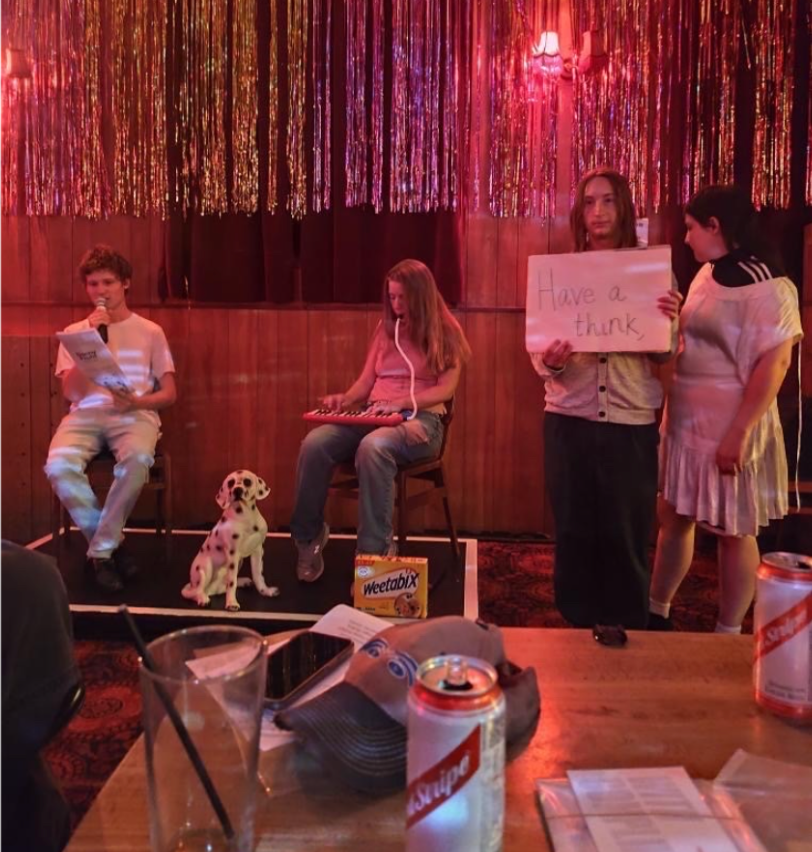
We arrive at the basement of Bethnal Green Working Men’s club for the launch of Feuilleton, the new print-only publication edited by Middleton Maddocks and Alex Heard. Copies of Feuilleton, whose name is taken from the Arts and Gossip column in 18th-century French newspapers, are crammed into a vintage suitcase at the door. Exaggeratedly passé in style, mimicking Publications of the highest order (The Paris Review, Frieze) this edition features short fiction, essays, and poetry. Text is interspersed with false adverts for DIY galleries, blogs, local wine bars, and Goldsmiths University.

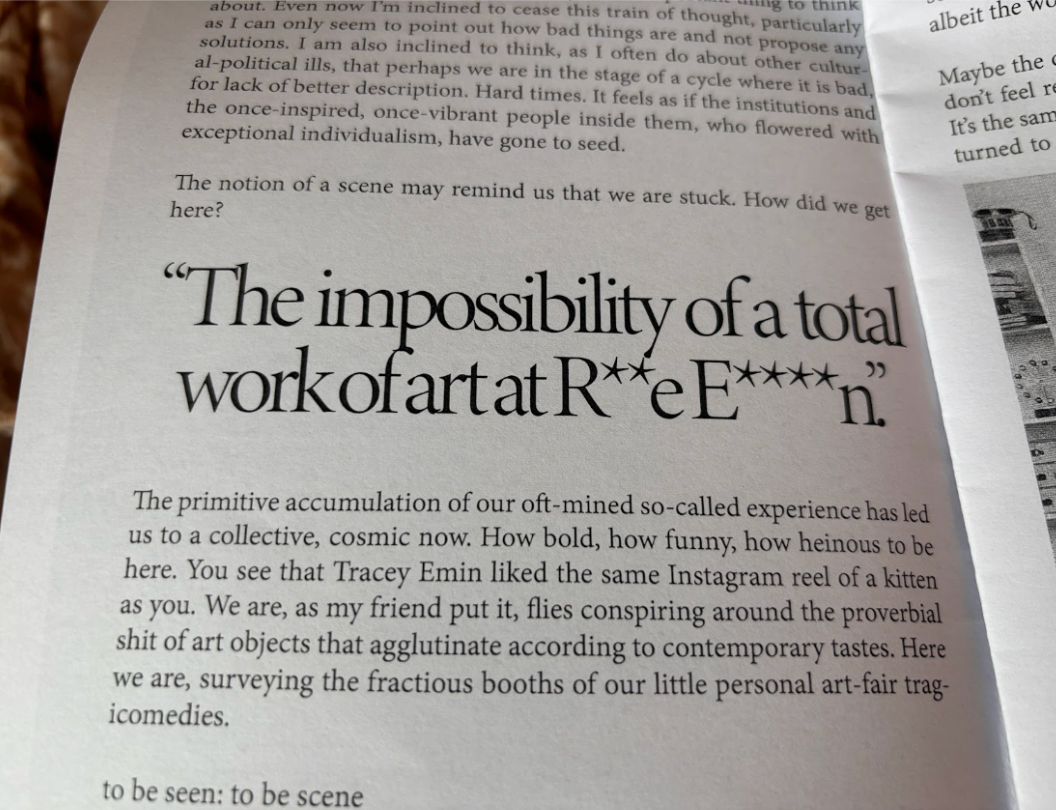
At about seven thirty, we hear from the editors in a letter that seeks to position themselves in relation to institutions, literary readings, commercial art, and the nebulous ‘scene’ that orbits them. “It's not just the woke art that is bad”, Alex reads , "although that's most of it.” Artists, like teenagers, have always forged identities in relation to what they are not.

With juvenile spirit, the launch launches into something lawless; they don’t seem to be able to get the tech to work. T.C. Hell debases children’s characters TinTin and Snowy, in a piece which exploits lapses in audible speech and ambiguous translations to fulfil the narrator’s masochistic fantasy. We hear poetry out of the mouth of a plastic Dalmatian named Cole Denyer, who struggles to get verses out between barking from a malfunctioning hidden speaker. Rachel Fleminger Hudson gives us a playful, girlish striptease. She is telling us about a very sexy lady. As her performance escalates, there is a negotiation of the sexual dynamic; her character forged through claims of aesthetic enjoyment.

After escaping from the smoking area, we return for a shadow-puppet show / ambient road movie. PLPC’s performance takes us on a ride through the desert. Biker gangs, cop cars, and fuel trucks are shadows moving across the makeshift screen, overlaid with a textured soundtrack of chopped up dialogue and music by Memory of Speke. Evoking the slacker absurdity of Beavis and Butthead and the early MTV cartoons, reconstituted in the archaic but equally lowbrow/ populist medium of the puppet show. The result of an asdf movie watched in private. But now, given a full cheek-by-jowl theatrical treatment, watching is a uniquely collective experience. The crowd wave their phone torches at the outro.

Memory of Speke’s later set weaves flamboyant narrative vocals with repetitive grooves. The band’s usual theatrical costumes are swapped out for jeans and shades, a distinctly Royal Trux-ian swag that fits with the cool-Americana of the shadow puppet show. Their catalogue is bouncy, tight-knit, theatre-kid bangers, straddling no-wave, new-wave and ska, in a performance that is perhaps too much of everything (instruments, genres, influences) to feel like anything new.

Coming away from the night, I am thinking about the current trend in art and music of reviving adolescence. Reading Feuilleton, I’m struck by the critical potential the figure of the adolescent actually holds. It is used here as a kind of post-historical device, to read inherited systems and aesthetic codes. Parody and subversion are ways of rebelling against an old order. Whilst Memory of Speke and PLPC also co-opt the aesthetics of childhood, both seem to function primarily to draw us into their own special universe. Struggling to articulate this key difference, I speak to a friend. He offered that “performative adolescence should always be about learning.” I think without this we risk regressing into the confusing blur of nostalgia.


Review / 23 August 2025 / By: S.Sweeney /

"KunstKammer Kuration" Review of Thirteen Images, curated by Anna Plowden

Thirteen Images recalled the RA Summer Show in sentiment only. There was far less garish neon-coloured floral prints (Florals? For Summer? Ground breaking). From the smallest work, Robin Miro’s Hanger (2024), to the largest, I.W. Payne’s Something is rotten in the state of Denmark (2025), nothing felt gratuitous and no detail felt overshadowed, irrelevant or forgotten. It painted a picture of taste within a certain London milieu: artists who are not always full-time artists and whose practice is invariably informed by those limitations. The opening was as packed as a house party. A retrospective survey, but for now, across performance, design, photography, sculpture and drawing (there were a few paintings). The show was held in an empty flat, spanning four antechambers: kitchen, front room, dining room, and bathroom.

Gonna make a call back to Hollywood Superstars ‘17 Trends at Art Basel’ that noted the prevalence of the “Fine Graphite Fetish” at the fair. In this economy (a market barely holding on, driven by weakness, tech bros and Silicon Valley), they’re what’s most likely to sell. Ellen Poppy Hill’s No Point in Making Myself Comfortable (2024) is a mixture of Edward Burra’s post-cubist figures and early Disney animations. Her work as a fashion designer evidently influences her illustrative work - there is a level of caricature that only the sartorial eye can achieve.

The curved, jumping caricatures are drawn on newsprint. Hill’s handling of pencil has a Lee Krasner-esque vibration: moving between scratchy, thin lines and intense, stacked shading. Building on the theme of caricature, Roberto Ronzani’s Miles Davis, 1980s (2025), like Hill’s work, incorporates fantasy with fine marksmanship. Gen Z artists, in comparison to their direct seniors (millenials) have made greater use of cartoon semiotics in their practice, drawing on a nostalgia for a time when animation graphics were a light-hearted reality visualizer, not just visual computer-generated fluff, Pepe or Wojack. I wouldn’t go so far as to use the moniker of “post-internet”. These works emerge from a place of self-containment, an analogue love of the medium of mark-making.

The contrast of works like Miles Davis and Momo Tibes “Once Upon a Time in Babelsberg” (2025), which frames a screenshot of a YouTube clip from Mockingjay (2015), part of the Hunger Games Trilogy, highlights the diversity of form in Thirteen Images. Now the art world is post-history, genre and form collapse. Screenshots emit the same palpable relatability and society-mocking rabalaisian humour as a pencil illustration. Really was post-internet, though!
``
Some items generated the feeling of a 1980s World of Interiors slightly spooky childhood playroom (non-derogatory). In I.W. Payne’s cut-out silhouettes, a male and female stand facing one another; their bodies integrated with speech bubbles upon a single MDF panel. The panel itself is covered with a large, multi-coloured polka dot pattern (not in a preteen, pedophilic Lucila Safdie style, but rather a mumsy, West London kitchen, Kath-Kidson-esque style). This theme continues in Anna Plowden’s Miladena Mirror (2025) in which a set of doll-sized blue organza underwear is pinned, Lepidopterologist-style, within a floating acrylic shelf. Miladena Mirror is reminiscent of Rosemarie Trockel’s three-dimensional collages, or perhaps the meticulously made-to-order Mary Janes that Hans Bellmer constructed for La Poupée, 1932-1945. I wondered if Robin Miro’s Hanger was a compliment to this piece - both works are akin in their rendering of sartorial objects in miniature. Baby Reni (a moniker for a designer, artist and apartment gallery) presented two pieces. Girlypop (2025) depicts a child’s white dress on a padded clothes hanger alongside a faux-naïve drawing on an apple shopping bag. Babi Reni’s Foundation saw a mannequin hand jut out from the wall, covered in foundation from a bottle cradled in its palm. The latter two works solidified the developing theme in Thirteen Images: Child’s Play or the ludic spirit.

Charlie Osborne’s work 2 Cariads Dw i wedi Syrthio mewn cariad efo ti (2024) could have been more centralised in the hang. A digital print of a blurred image is stretched on canvas, with much in common to the sample images you find in Snappy Snaps frame displays. A man and a woman, one with a 2012-Greenpeace-style headband, smile at the camera and lean into one another. Its title, in Welsh, translates to “Two darlings, I have fallen in love with you” and completed the romantic, blog-esque ideation I, as viewer, had projected onto the piece.

Osborne’s work with blurred imagery is part post-human, part mid-2010s nostalgia. It surmises how it feels to love while also forgetting oneself amid the battle against face-recognition technology and the harvesting of memory. It also looks like a Tumblr rebloggable image circa 2013, the soft distillation of form reminiscent of the focus adjustment on a YouTuber bloggers digital camera: “Hi! it’s X, and I’m here to talk about heartbreak and data harvesting”. I want to know what it was about this time that matters now - a time when the mask of liberalism was slipping, but still in place, the image carries a nïavety that online cultural production, today, does not.

Hollywood Superstar wonders if this “salon” style should continue in perpetuity - a space where one can sample taste and refract it back to a crowd “IRL” rather than “online”. I’d like to liken this show to the Paris salon of 1767, at the Louvre, which Denis Diderot criticized and praised for its great contribution to (to use an anachronistic term for his time) aesthetic discourse. In writing for Correspondance Littéraire Diderot marked the early development of art criticism, from image to word (ekphrasis) and then from word back into image. Instagram stories are the modern day iteration of eighteenth-century ekphratic writing. Thirteen encouraged Cheek-to-Cheek interactions with artwork only previously seen on an Instagram grid - forcing opinions out of the digital circle-jerk and into the remit of house-party conversing.

“Even if all the works of Europe's painters and sculptors could be brought together, our Salon would not be equalled. Paris is the only city in the world where such a spectacle can be enjoyed every two years.”

I’d like to think that London, and Thirteen Images has the potential for catalysing a series of beginning of equally reactive, or summarising, survey exhibitions. More aesthetic discourse, please, the critique of great work eventually aids the development of new formalisms.


Review / 18 August 2025 / By: Mandy Warhole /

"Against Morality" Dean Kissick speaks to Rosanna McLaughlin at ICA

Our very own correspondent goes to see Dean Kissick speak to Rosanna McLaughlin on the eve of her book launch, the surreptitiously named “Against Morality”.

Rosanna McLaughlin, a two-time published author known for her heavy flow of surgical takes dissecting poignant topics within art criticism, is back with another banger. McLaughlin, rocking Vans and flannel, channels a combo skaterboi Lydia Tár and young Paglia.

Her latest work Against Morality takes on the art world’s current mandate to platform only artists whose work centres the tenets of DEI: “I am of X identity, and that experience is like Y, about which I have made this art.” McLaughlin is saying this is the basic axiom that everyone from the Barbican to David Zwirner wants to see in their programmes, which results in press releases comparing George Rouy to Francis Bacon.

McLaughlin calls this tenet “liberal realism”. It weaponises the conceptual inseam of Soviet Realism, where a set of moral virtues, hard work and self-sacrifice, prescribed the aesthetic model for a country’s propaganda. McLaughlin complains that Western art institutions have entered their own era of authoritarianism, which, to her, is just when you are, like, very particular about something. Much like the title of her book, Against Morality, the use of such blatantly sensationalist language to describe a still very niche phenomenon within a small societal margin feels a bit like a broke, left-field musician’s last-ditch attempt at writing a breakout pop song. It is pop-punk and hard to watch.

Interviewing her about this is, of course, cultural marksman, Spike magazine’s golden era’s golden boy and human Grok, Dean Kissick. Amid McLaughlin’s very subdued and very British attempts at transmuting her agginess at the art establishment, Kissick’s job is to ask the smart, complex and nuanced questions about her work.

“Are you a liberal?” Kissick begins.

“Dean has spent too much time in America, it seems,” McLaughlin snaps back quickly, to merry laughs from the audience. “Are you?”

“Yes, of course I am a liberal,” Kissick replies honestly, hoping his contrarianism is a knife. Instead, the audience erupts in genuine cheer.

And now we are locked into this slurry of ever-swelling internet slop. Kissick reads from a review of Against Morality published in Frieze that is mostly about his cannonball, “woke-destroyer” of an essay, “The Painted Protest”.

He unloads his personal beef and brotherly love with Jerry Saltz, all of it over DMs. He quotes the messages.

McLaughlin remains politely transfixed in her place.

“I have this beef in the DMs with Jerry Saltz,” says Kissick.

“You know, Adam Curtis really wants to talk to me,” says Kissick.

McLaughlin tries to make a decent pastoral point about how anti-racism, anti-ableism, anti-etc. are great principles to apply in interpersonal relationships, but, when expected of art production, prevent us from letting difficult ideas exist within the moral greyscale. She does try to make that point, but with her populist book title behind her, glistening in giant yellow letters like a chicken shop menu, and Kissick trying to start a wildfire with his mouth, no one takes that seriously.

Time for the Q&A:

1. A complaint about how, apparently, DEI art is anti-Beauty (in the Platonic sense). Example cited? The Renaissance. A question that could have been asked only by a twink and my Russian mother.

2. An actually good question about why, according to McLaughlin, art institutions have sought to prioritise IDPol-based art (mine). Largely unanswered. A joke is made about how egg pots at Pret had a Pride flag stuck on top of them this past June.

3. At this point, something actually fun happens. A man, from here on known as the Unabomber, pipes up. He accuses McLaughlin and Kissick of opportunism and says that they both secretly know the only art worthy of mention is formalist, so should they pack up their discourse business, or maybe, even better, kill themselves.

I am by no means paraphrasing.

We pour out into the rest of the ICA, where the discourse, said on stage to be “over-legislating art production”, continues.

As the Unabomber (a friend of Kissick’s) towers over me, emanating high-powered yap and the general vibe of an over-tuned cello, I clock an immutable truth. While the art industry may move in swings and roundabouts to accommodate the flow of capital, the actual artists and art groupies (critics) will be forever guided by the instinct to repel the latest set of expectations. To evade understanding in favour of getting drunk on the feeling of otherness they experienced in their suburbs. Of New England, or of London.

Is it like this? No, it is actually more like that. Like that? Well, actually, now that you said it is like that, it has become like this. And, just like that, I am once again intentionally stuck co-loitering with the hurt children of the contrarian bohème.

I snap back into reality from these life realisations and yell at the Unabomber, “Maybe Proust wasn’t the ultimate formalist, but just the ultimate worst editor?”.

To my absolute delight, he explodes again...


Review / 17 July 2025 / By: MissUniverse2016 /

"Bad Ass F*cking Movie" Review of Nettspend at Electrix Brixton, London

Entering the Brixton venue to see Nettspend, arguably the most prolific artist in the underground scene, a smell hits my face like a suckerpunch. It’s disgustingly bad. I’ve known about Nettspend since the Triller edits showcasing snippets of his music in 2023. Today, he sells out high-capacity venues filled with 14-year-old children. As hundreds of teenagers swarm the venue, I realise my guest and I are the only people over twenty.

The Merch stand has UK exclusive Early Life Crisis goods, the name of Nettspend’s new album. T-shirts were £45, and hoodies were priced at £90. Not too bad for merch, but I know I could also buy a pair of Balmain jeans aftermarket for that price. Nevertheless, I left the show with a t-shirt and a hoodie, flexing on all the teens. Call it exposure therapy.

An Unknown DJ opened for Nett. His name sounded similar to the greatest ever names in hip hop - KillerKam - he also happens to be the worst DJ I’ve ever seen live, constantly pausing songs to calm the 13-year-olds in the crowd. The mixing was terrible, but this doesn’t bother me too much, as I’m still trying to get over the fact that I'm inside a literal NettSpend sweatbox.

The music stops, and the DJ utters the words, “I have a couple of special guests for you.”

A WRAITH000 Beat starts playing and out comes EsDeekid for his hit song Phantom featuring Rico Ace. The crowd erupts for a median time of 1 minute. Following this, they stand still, like awkward emo kids, until the next bass drop. The audience was really the most experimental thing about this whole event… they felt almost trained by a higher power, hypnotised, hyper-responsive. Nettspend is that power, I guess.

The next song plays - it’s every TikTok fashion head's no.1 played anthem: LV SANDALS featuring Fakemink/9090Gate, EsDeekid and Rico Ace. The crowd once again erupts when they see a dripped-out Fakemink pop up with some of the loudest vocals I’ve ever heard. It was blistering. I was standing at the back, and a kid who I’d say was around 16 wearing a Motley Crue T-shirt screamed “FAKEMINKKKK" at the top of his lungs.

Realistically, I wasn’t expecting anyone there to have even heard a song by Motley Crue beyond OSBATT chains and “Is Coraline good?” feng coded Instagram stories. The cultural significance behind this is truly beautiful to me…it shows that the underground coalesces with dadrock. The likes of Nettspend, Nine Vicious, Che, Fakemink, Leakionn and prior names such as Polo Perks using old Rock samples or even Crystal Castles has really bridged the gap for teens in the 2020’s as the likes of Young Thug bridged the gap for Country & western music and trap for me in 2017 with Family Don’t Matter featuring Millie Go Lightly.

After the smoke settles, the crowd listens to 30 minutes of pure classical music. Random choice, but it has a calming effect. Nettspend comes out to his song “Stressed” produced by Ice Spice’s right-hand man, RIOT. He’s dressed in a tatted up T-shirt with the word “codependent” (each letter rendered in a different brand logo ) made by @questionable.life.decisions, black pants which were probs Celine or smth and snakeskin boots. Cool as anything, he controls the crowd in waves by bass drops and vocal tone changes. It was mesmerising. He stops the concert for about 3 minutes to make sure the crowd aren’t crushing the people at the barrier, and that’s when I hear someone utter the words “The way he checks if everyone is okay is so tuff bro 🥀”. The crowd was so internet-savvy that I felt, even as an internet addict myself (posting 2-3 TikToks a day, a keyboard warrior) I was already behind the younger generation.

Fakemink makes his second appearance. He plays songs Mink & Easter Pink. I’ve seen Fakemink about 5 times, and every time he seems more unclear about how he wants to perform: shouting every other lyric, catching his breath for the next 2 lines. Unpopular opinion, but I like the way he performs. Compared to the Lo-Fi designer rap he makes, it's full of energy.

Fakemink finishes his two songs, and Nettspend shoots “I love you, Mink” into his autotuned mic. It’s like he wants to make sure the crowd know he affiliates himself with people like Fakemink. It seems with the underground scene that if something isn’t said explicitly, it will become salacious, as underground fans love Drama. They’ll hear one thing and run with it, and next thing you know, Mazzy & Nettspend breakup lore is the only thing showing up on my for you page.

The mindless self-indulgence hit Shut Me Up starts playing through the speaker, followed by Nettspend's biggest song off the album BAD ASS FCKING KID. The crowd gains life. Ending his set with DRANKDRANKDRANK and That One Song that Deftones took down for the sample. I felt it was a fitting end to leave on. DRANKDRANKDRANK* was the first Nettspend song I heard, off the famous Triller video that made him pop off. I found it first, though, as always.

This wave of underground is unstoppable, and even if you try not to pay attention, you’ll have Fakemink come out as support for Drake at Wireless…


Review / 16 June 2025 / By: Mandy Warhole /

"Who's gonna tell the dogs it was satire?" Review of Magic Farm, directed by Amalia Ulman (2025)

Mandy Warhole is a stand-up comedian in London.

"Edna (Sevigny) is like an empty bat signal for a girlboss or successful cultural self."

Amalia Ulman been knew. Her sophomore venture, Magic Farm (2025), plays like a 360-view of a devoutly organised trousseau box, flat-packed with everything a girl needs to become a woman: bridal linens, family heirloom jewels, and heavily diarised secrets. Ulman's bridal package consists of nylon tablecloths, camera equipment, and surgically constructed arguments in ethno-nihilism. The same starter-pack that prepares a woman for marriage is what I imagine prepared Magic Farm to be the final word on the collapse of Western multiculturalism.

Which is fine, I guess. It makes sense - even. Ulman is an Argentine-Spanish filmmaker and an immigrant artist living and working in New York. I was once, too, an Argentine-Spanish immigrant artist living in the city. Except, I am actually Russian and barely made any art. I am certain, however, that we would have had many of the same run-ins with the insidious “creative” that the film portrays. Simon Rex plays Dave "a creative" twat pushing 40-something whose narcissism spawns an eerie vitalist force, capable of turning tricks on the dirty streets of the algorithm using even the slimiest offcuts from the content farm. A group of these men, born of VICE, are called “an agency." In a profoundly meta-textual casting choice, the agency is spearheaded by girlboss Chloe Sevigny, styled and poised like late-stage Man Repeller. Supporting her is famed gay-looking straight actor Alex Wolff, who plays Jeff, Chloe Sevigny’s incapably horny Gen-Z producer. An incompetent, chlamydia-ridden, narcissist stoner of the visibly-ex-skater variety is an inspired character from Ulman, lifted from a taxonomy of the Verminous Male Sexual Types of New York City. Wolff’s Jeff is a generationally-pathological personality, more common than deli e.coli lettuce. I am confident in my certification of Ulman’s satire - of a creative agency making YouTube mid-form content - as spot on.

Of course these Americans are going to come to an anonymised Latin-American countryside and breakdance vaguely Spanish words with their huge, open mouths. They will impose their own, completely inaccurate portrait on the periphery in order to then get clout in the bi-coastal metropoles. Like the trousseau box, they will compartmentalise every thought and trinket into a space that makes sense for them. There is more cultural analysis than ever before, and it's super Neo-neo Colonial. Ulman drives that point home through her CapCut-esque content-forward editing. The go-pro is an obvious visual symbol of the 2010s performative obsession with putting oneself in the shoes of the Other as a means to a political end. Strapping Go-Pro cameras to the dogs and cats of St Cristobal pokes fun at the idea that this kind of universalist slapdash empathy is possible. The tumble-dryer match cuts, too, remind us of the early days of YouTube vlogging.

Not to mention, the bastardised neon grade or the Dolls Kill-era wardrobe for the models. Every vestibule needs a centrepiece, and every barnyard needs a horse that you can stroke like a stress ball in between filming grueling outfit videos. Here, Edna (Sevigny), is like an empty bat signal for a girlboss or successful cultural self. A veteran it-girl playing a veteran it-girl, she comes with emotional baggage in the form of suitcases full of spotless tabis, old Isobel Marant and an image of tortured womanhood she cannot shake. With a #metooed husband, Dave, who makes her strap into her blazer like horse in its plough in a quest for those YouTube bucks, Sevigny plays a character whose former sub-cultural clairvoyance has clearly been reiterated to the point of becoming a trend report powerpoint. Her performance is delightfully morbid, a bit telenovela, compared to the hyper-naturalistic Brooklyn mumblecore shit the rest of the cast was on.

The cracks start to show when Ulman self-inserts as Elena, the only character that speaks Spanish, and acts as the sole bridge between “the Americans” and "the locals”. She is supposed to be literally and linguistically stuck between the two worlds, existing at the standard level of cognitive dissonance required to “succeed” at immigration. Yet, we do not really see that in the script or the performance. All she confesses to seems to be that she is the real girlboss to Sevigny’s mythologized one, thugging it out for production credits.

Ulman wants so badly to paralyse the world in a doomist, punitive verdict about globalisation and its discontents. That, maybe, makes for great conversation fodder in a setting where 40 of your “closest” terminally bicoastal friends exchange deadpan remarks about how deluded everyone else is. Lines are delivered to muted ICA laughs and natural wine burps. To the rest of us, in a sort of Russian doll turn of events, Ulman and her crew came to a small village in a country significantly affected by its power imbalance-relationship with the US, they filmed their nuanced post-colonial takes, and they left the people with the absurd. Who’s gonna tell the dogs it was satire?


Review / 11 June 2025 / By: Sexi Hulk

"Karl Marx & Merlin Carpenter In a Hut" Review of Vintage at Galerie Tenko Presents, Tokyo

Vintage at Galerie Tenko Presents, Tokyo, 15.05.25-29.05.25

In a hut tucked between Shibuya and Ebisu is a new gallery space which opened last month. Well - ‘new’ isn’t quite accurate - but - ‘hut’ is no exaggeration. Since 2022, Tenko Nakajima has been running Galerie Tenko Presents as a nomadic space. These intuitive and nichely curated shows have occurred in locations cleverly orientated for each artists work; these range from a love hotel in Kabukicho for a Louis Backhouse exhibit, or the Hysteric Glamour shop hosting the installations of Argentinian director Amalia Ulman. Now, Tenko has got the keys to her first permanent space. It’s a hut that used to be a bar, that, as Tenko recalls, she had visited as a teenager circa 2015 on electro-swing nights, which, “already, during its peak was considered a bad genre.”

The inaugural exhibit in the space Vintage features installation work by English artist Merlin Carpenter. Tenko describes how she shared a taxi with Carpenter in Busan last year, how they discussed his Marx and Trier drawings - Trier being Marx’s birthplace. Carpenter made these works during a residency in Beijing (perfect) - they struck Tenko as both relevant and vintage. Boom, she goes off about how Tokyo is actually the capital of vintage and preserving the past:

“Vintage stores are treated like museums here, each item is repaired, cleaned and so-curated. I love the thought of the buyers frequenting a suburban Goodwill or Humana once a year, filling up boxes with weathered reunion t-shirts and college jumpers and restoring them to Japanese standards. Then re-selling them at prices surpassing their original tags.”

My first impression of Galerie Tenko Presents caught me standing between a Denny’s and a Starbucks - no Galerie or art kids in sight. I called Greta, a close friend of Tenko’s and I, who had invited me to go with her to the vernissage of Vintage - I’d hopped into a cab straight after my 9-5. She put Tenko on the phone, who apologized and chuckled,

“Of course, I put it wrong in the IG bio - sorry!”. She passed me the right address and I rode another ten minutes in an uber that smelled like citrus Febreeze. The vernissage was supposed to be over in five minutes - but, of course, there was no rush among the group of bright young things mingling and smoking right outside.

Before I could even set foot inside, I was stopped by my dear friends, Yoma (big scar through right eye, even bigger heart) and Carlos (mysterious guy, youtube connoisseur) who took my heavy Longchamp X Jeremy Scott bag off me and handed me a beer. We chatted about everything but art while a cute girl kept on staring at us. I wanted to include her in the conversation, because I felt awkward for her - she seemed to just want to be part of something and so clearly was not. After, I realised she was actually there with Carlos, he introduced her to me, in front of her, as follows: “She’s a Louis Vuitton bag customizer and one time she was commissioned to paint a father kissing his kid on the lips, so she painted this image on the LV trunk, but then LV did not approve of this image and now because of this incident LV only offers selective pre designed customisation.” She nodded her head. I didn’t get her name.

I squeezed past the people, said 'hi' to Tenko who just come back from LA and recieved a quick debrief of all that happened, could have happened, but did not, on her trip. She was wearing a cute beige matching set and was serving beer behind the bar with her mom, Hanayo an acclaimed experimental artist. Finally, I find Greta, she is chatting to a guy called Alex (never met him before, celine vintage bag, skinny pants, is offended about me asking if he works an office job) about her new loaded Glock 19 tattoo on her thigh. It’s big and sore and dope. “It’s the first gun I shot.” she says. She had gotten it to cover a tattoo she’d grown tired of.

I escape the conversation by climbing up the wobbly wooden ladder to the top floor of the gallery (I shall not be able to wear any of my outrageous heels to the next show). The uppermost floor looks like an abandoned Japanese bedroom. Partly falling apart; quite charming. Carpenter has painted his black, thick-stroke faces not on canvases, but on the gallery’s walls. Sprawling, with no boundaries, over the wood and metal inserts. Open Territory. It will be interesting to see how it interacts with the work of following exhibitors, like the second intervention in the space, by Jay Chung and Q Takeki Maeda, **Hanshan Shide.

A selection of Carpenter’s 2006 pencil sketches on paper lean against the walls in glass frames. My favourite, Trier (Beijing) 2 (2006) depicts a group of Karl Marx busts. They all look mad. It makes me think of when Beijing gifted the city of Trier a statue of Marx for his 200th birth year anniversary in 2018, and Trier was reluctant to accept the offer. Now, the statue stands, a 4.4-metre bronze statue, just off the main street.

Merlin Carpenter glided past the crowd like a wizard, his long hair flashing white-grey-brown as he snapped photos of us with a tiny camera. Carpenter’s entire career hums with political tension. Grounded in Marxist materialism, his work tears through the illusion of artistic autonomy, laying bare the art world’s unavoidable entanglement with capitalism. He doesn’t soothe; he sabotages. One of my favourites? Communism Time for a Bath (2003), a repurposed BlackBerry Alpen cereal box.

I climbed back down. The vernissage was over. We all walked off together to find an izakaya big enough to hold us all. I was overwhelmed, and Greta was overwhelmed, so she suggested we should Irish exit. We did so. Then she changed her mind, “Wait, let’s say bye,” so there we went back and said bye. The weakest Irish exit ever. I lit a cigarette on my way home with my new Tenko Presents lighter. It has a quote on the back, which I’d forgotten. I just looked it up on Tenko’s webshop. It says: “I wasn’t expecting to enjoy this and I am not.” I don’t know who you are, Georgie, but thanks.


Review / 20 May 2025 / By: River Gaush /

"The girls definitely resemble their art" Review of After Amy, Chess Club, Hamburg

After Amy, Chess Club Hamburg 18.04. - 10.05. 2025

A few months ago I started turning my back on Contemporary Art. I had entered what I imagined to be a major phase in my early adult art/life in which I’d reject other people’s artworks and records of my own and affirm my recently acquired and self-proclaimed writer status through negation. It was dumb and after some weeks I realized that not looking at things worsened my eyesight, dropping from a Mild correction to a Moderate one.

Anyway, this text isn’t about me but After Amy, an exhibition of Jasia Rabiej and Ant Łakomsk’s works at chess club in Hamburg (18.04. – 10.05. 2025). I think there’s something great about experiencing prints/paintings/pictures (in this case I’m not sure how and if one should categorize them. 'Pictures' in the early 20th Century Gertrude Stein sense of the word seems to be the most fitting) that reveal more of their layers the more time you spend with them.

At first only formalist observations came to my mind and I couldn't tell if I liked the pictures or if I could even write about them. Though I wasn’t sure I found the work boring, something initially left me hanging on its surface. And then I met the girls. Jasia and Ant are definitely not just a surface but actually bright and funny women. Like, really clever and fun and a bit neurotic too. And that made me like the work more. When we went to have drinks on the rooftop terrace of the Radisson Blu —there aren’t many options to elevate yourself in Hamburg— they told us about J’s meme page that got taken down and Ant lectured us about the Polish Pope Jan Paweł II (RIP!).

I had conversations with Amanda, the Chess Club founder. Can one experience an artwork in its fullness if the artwork isn’t discussed or carried out with visitors, friends, and if one’s lucky, the artists themselves? I don’t think there is a way to know if you really liked something without talking or writing about it. Even when it strikes you like love at first sight, you still need to unfold what happened because it is so interesting to discuss what you love in an artwork. I guess it is difficult for me now not to see them in their art. You know when they say dog owners look like their dogs? Well, the girls definitely resemble their art.

Ant’s paintings are elongated and wear dark, washed oil colors clouded in a white veil like in Silke Otto Knapp’s work. They’re reserved and subdued at first, but not evasive. I think they know what they’re stating. When I look at them, especially Living Room and After Amanda (named after Amanda Weimer—or Amy?), I can’t help but think of 19th-century French painting. The undertones could belong to the German or Dutch traditions—maybe that’s the Polishness piercing through?—The light shrouding the silhouettes, even in the rock concert one— the rose garden setting and the bourgeois living room—I don’t know, something of the model placidness reminds me of Olympia. Maybe it is too easy to refer to French painting. Again I am not much of a critic and am not even a visual art enjoyer anymore. Jasia's work on the other hand, while also working within the realm of girlhood, depicts figures and objects tied to the register of lower-middle-class taste, even though the girls in Jasia’s pictures don’t even appear to have jobs. They’re lounging around carefree, they have time to watch Trisha Paytas videos, dabble in arts and crafts attend birthday parties, etc. We assume they are girls, not because of any clear anatomical detail but because of surrounding cultural cues — bright frosted cakes, glimmering bokeh and TV glow, souvenir snow globes, long hair, handbags, and other ephemera of soft domestic excess — all familiar signifiers in the staging of girlhood.

Amanda tells me that Jasia finds her pictorial material online when she doesn’t take her own photographs. She sources images for D&R and sometimes sends Ant a selection to portray. Jasia’s prints, without ever being too obvious or obnoxious, could pass as AI-generated — but if you look at them closely, you understand they aren’t. So instead of looking at something and asking yourself if it's real and then finding out that it’s AI, you do the opposite: you look at something that you think is AI, but it’s not. It’s real. And there’s even a layer of makeup on the surface. Notice how the artist’s mixing plate is a palette is a makeup palette.

At times I tell myself Jasia’s pictures look even more like paintings than Ant’s paintings. I’m not sure about Jasia’s small altar display sculptures though but that’s ok because I think Jasia wasn’t entirely sold on them either. They work as a nice complement to the rest of the show. They ornament and display ornaments, luring us in with a shop window logic, e.g. dried seahorses laying on Bobbi Brown lipstick cases, a set of keys, coins stacked next to a carved and stylized ‘One Love’ inscription. They work great as set design elements or aesthetic bait but maybe that’s the point. I loved the rest of the show so I don’t really care.